Friday, September 30, 2005

ASCOT - Pressure to change?


The Blood Pressure Association is a registered charity. Its Chairman is Professor Graham MacGregor. They have kindly produced a patient information leaflet on the much hyped ASCOT study.

Have a look at it and see what you think.

Insider knows what he thinks about it!

http://www.bpassoc.org.uk/information/ascotstudy.pdf

Here is another view:

http://www.pjonline.com/pdf/spectrum/pj_20051001_ascot.pdf

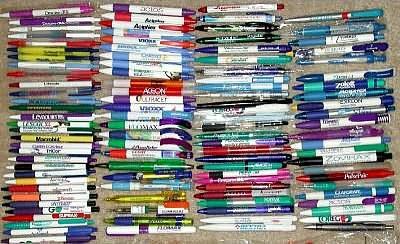
Waiter! There is a pen in my soup!


Waiters are being encouraged to collect all the freebie pharma pens they can lay their hands on.

Then, when they get a "problem customer", the waiter makes a "diagnosis" and subliminally suggest some treatment options with the pen they give the customer to sign the check.

It’s all harmless passive aggressive fun. Here are some ideas:

Give a pen that says…….
Zoloft – Good for the obsessive compulsive guy who double checks the bill 5 times. (OCD)
Lipitor – You just had to have extra cheese with that, right pal? (Cholesterol)
Campral – Maybe you should stop drinking. (Alcoholism)
Paxil – Customer eating alone? (Social Anxiety Disorder)
Viagra – Ladies, sick of the old perv staring at your tits? (Erectile dysfunction)
Zyban – For the customer who bitches about the no smoking rule. (Nicotine Addiction)
Ritalin – Didn’t pay attention while I recited the specials? Bastard. (Adult ADD)
Nexium – But you asked for it spicy sir. (Acid reflux disease)
Propecia – You may have money you rude arrogant bastard - but I have all my hair. (Baldness)
Prozac – Shit, everybody needs to be taking this one. (Depression)
Ortho-Evra – For the woman with the bratty kids. (Birth control)
Nameda – For customers who forgot what they ordered. (Alzheimer’s)
Enablex – For customer always getting up to take a piss. (Overactive bladder)
Clozaril – Customer says “Do you know who I am?” No I don’t. And I’ll bet he doesn’t either. (Schizophrenia)
Haldol – For the table that thinks the customer is always right. (Anti-psychotic)
Valtrex - For the resident Don Juan/Skank. (Herpes)
Remicade – What customers will need if they fuck with the kitchen staff. (IBS)
Xanax – Bitch, just chill.

Insider wonders how long it will be before this idea is "hijacked" by a Pharma/PR company as a real part of a viral marketing campaign?


Hat tip: www.waiterrant.net

Thursday, September 29, 2005

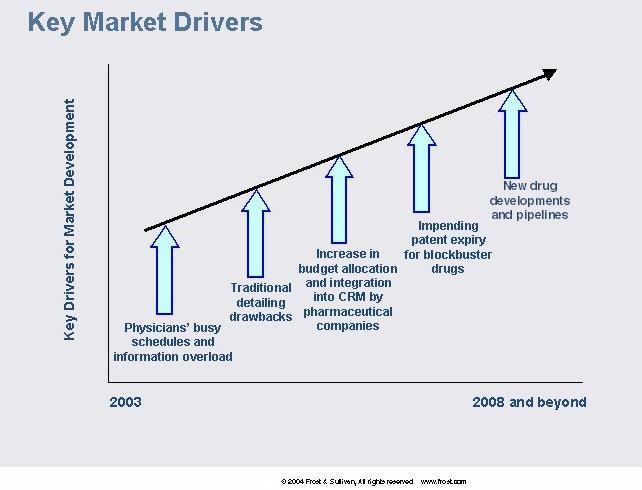
Big Pharmas Big Problem 3


Source: Frost and Sullivan, www.frost.com

In the Pipeline has a great take on molecular modelling.

Insider has looked at Big Pharma R&D with increasing scepticism. The NCE table has never been so bare. Innovative basic science has been squeezed out by copycat "dumbed down" research. Or even worse, simulated research! How many lost molecules.....................?

http://www.corante.com/pipeline/

What to do with that odd half mill......

Royal Bank of Scotland Group PLC said newly appointed deputy chairman Sir Tom McKillop, the outgoing chief executive of AstraZeneca PLC, has bought 30,000 shares in the bank at £16.12 apiece.

Wake up! It's time to go to bed

Poor US consumers are getting knocked unconscious by DTC TV ads for sleep aids at the moment: AMBIEN (Sanofi-Aventis), LUNESTA (Sepracor), SONATA (King Pharmaceuticals), and ROZEREM (Takeda).

Insider is sure they are not needed......looking at the quality of American TV programming.


zzzzzzzzzzzzzzz!

The Man from Atlantis


ATLANTIS, Fla. (AP)--Johnson & Johnson (JNJ) stole a patent for an implant used in breast cancer detection from two Florida breast cancer specialists, according to a federal jury who ordered the company to pay the pair $2 million.

J&J must also agree to give Atlantis surgeon John Corbitt and physician assistant Lori Leonetti 10% of an estimated $39 million in annual revenue from the implant if they want to continue selling it, the Miami jury said Wednesday in its verdict.

Insider knows the Man from Atlantis always wins!

Exjaded!

WASHINGTON -(Dow Jones)- The Food and Drug Administration raised safety questions Wednesday involving Novartis' proposed drug to help remove excess iron in patients undergoing regular blood transfusions as a result of anemia and other blood disorders.

The agency, in briefing documents released a day prior to a Thursday meeting about the drug, said it was concerned about possible kidney impairment and liver damage in some patients using the drug. The FDA has asked an outside panel of medical experts to make recommendations about whether the drug should be approved. The FDA typically follows its panels' advice but isn't required to do so.

The agency also raised concerns about whether Exjade was safe for long-term use in general population, given the trials involved about 800 patients and, among those, about 500 received Exjade. Most patients in the study received the drug for about a year, although some received Exjade for about three years. The drug would likely be used for longer than that by many patients.

UPDATE:

The Blood Products Advisory Committee (BPAC) of the FDA has given a positive review and unanimously voted to recommend approval for the use of Novartis' Exjade (deferasirox). The compound is currently under priority review by the FDA as the first and only once-daily oral iron chelator for the treatment of chronic iron overload due to blood transfusions in adults and children. Exjade, which has been designated an orphan drug in both the EU and the US, is also currently under priority review in Canada, Switzerland, Australia and New Zealand. Additional regulatory submissions have been filed around the world.

What is a "lead director" exactly?


Dr. Stanley Ikenberry has been made "lead director" at Pfizer.

In this newly created role, Dr. Ikenberry will preside over executive sessions of Pfizer's independent directors and will facilitate information flow and communication between the directors and the chairman, in addition to other duties specified by the Board.

Facilitate information flow and communication between the independent directors and Hank!

Was there a problem before Stans' appointment?

Please let Insider know.

Wednesday, September 28, 2005

Between a rock and a hard place

Poor Geoff Birkett at AstraZeneca. First of all he has to fend of the analysts and media about the CATIE study ( http://pharmagossip.blogspot.com/2005/09/catiepsych.html ) which shows that Seroquel is no better than an older (and much cheaper) antipsychotic and will affect this blockbusters future growth.

http://today.reuters.co.uk/news/newsArticle.aspx?type=businessNews&storyID=2005-09-22T161001Z_01_MCC258173_RTRUKOC_0_UK-ASTRAZENECA-SEROQUEL.xml&archived=False

Now, just days later, he has a bomb dropped in his lap by generics giant TEVA, who want to steal the market Seroquel already has gained.

http://www.bloomberg.com/apps/news?pid=10000102&sid=aAO3O15d14OQ&refer=uk

That special relationship


" Tony...................Hello, Tony................are you there, Tony........................!?

Donald Rumsfeld is briefing the President, "Yesterday, three Brazilian soldiers were killed. "
"OH NO!" cries the President, "...but how many is a brazillion?"

Dont hold your breath

SkyePharma believes AstraZeneca is unlikely to launch Symbicort, its combo asthma inhaler, in the US before 2008.

Source: Forbes

Careful with that golden goose!


The US market has become increasingly important for Big Pharma, especially when it comes to new "blockbuster" products.

So, Insider views the news that GSK is making contingency plans for a possible change to how drugs are priced and sold in the US, the biggest market for medicines in the developed world, as significant, to say the least.

Needless to say, any changes wont involve prices going up! Poor US citizens already feel "gouged" and eye their Canadian and Mexican neighbours medicine prices with envy.

Americans fork over $60 billion extra paying U.S. prices instead of prices charged in Canada. That is greater than the gross national products of Kuwait, Iceland and Jamaica combined!

“My own feeling is that at some stage over the next few years there will be a change to the US pricing model,” Sir Christopher Gent said in an interview with The Times.

The GSK chairman would not speculate on how severe the overhaul might be, but confirmed that the drug developer was already considering its response: “We have to look at ways of mitigating (a change in pricing) in terms of its impact on the company’s ability to continue to do high intellectual property research and development.”

A recent meeting between Sir Christopher and Mark Mclellan, the former head of the US Food and Drugs Administration and the man now running the Medicare/Medicaid programmes to talk through the “complexity” of the issues seems to have been the stimulus for this contingency planning.

The Golden Age of Big Pharma ending with the cooking of its golden goose? Watch this space.

http://business.timesonline.co.uk/article/0,,9068-1800616,00.html

Tuesday, September 27, 2005

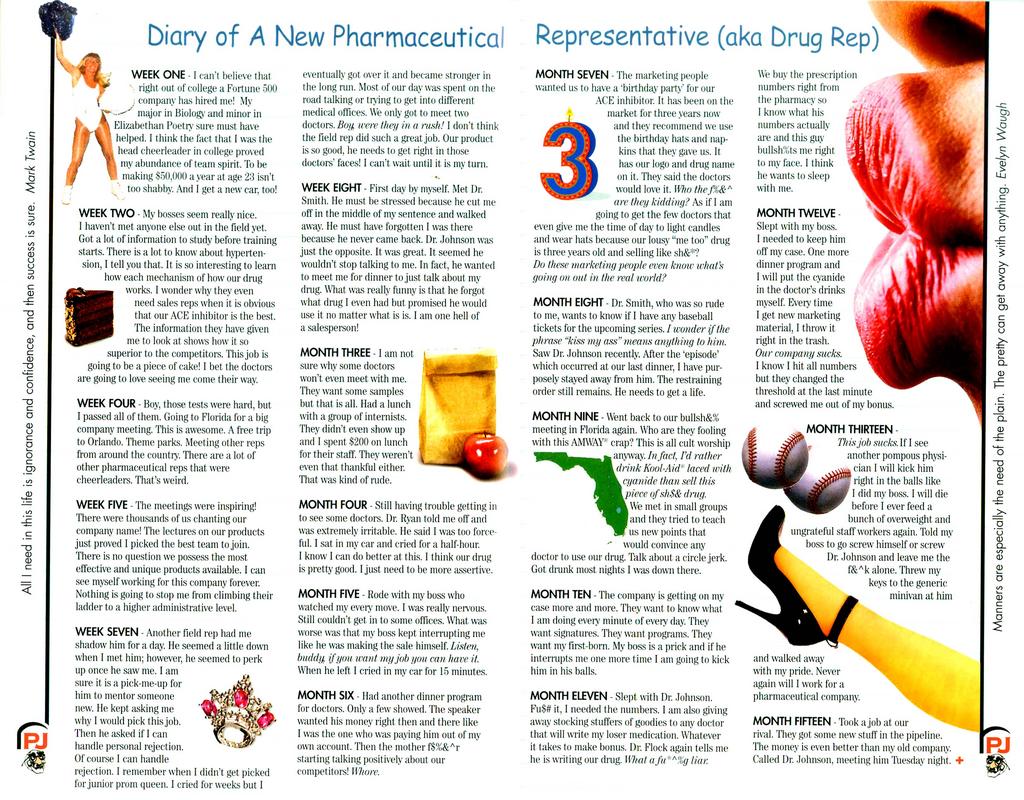
Diary of a New Pharma Rep


Click on the image to read the diary.

The truth can be funny and hurt at the same time.


Hat tip: Placebo Journal

No! No! A thousand times, no!


Poor Sir Tom McKillop. Doesn't anyone listen to him now he's on the way out (or didn't they even when he was "in")? How many times must he say it? AstraZeneca is NOT looking to merge with Novartis, or indeed, anyone else.

Got it? Good! NO!

Quick Quiz 4

Which Big Pharma CEO said the following:

"I was interested in making the company successful and never paid attention to what this would bring me personally."

"I go on business trips with my wife, otherwise she would never see me."

" What I have not done is put personal friends in the business, because one day it's all going to stop and you dont want to find yourself alone because all of your connections were linked to your job."

Help Wanted: CEO, GSK

Sir Christopher Gent, chairman of GlaxoSmithKline, says he has identified up to four internal candidates to succeed JP Garnier, the ebullient CEO who is due to retire in October 2007. So, at least three disappointed executives there then!

Insider believes front runners will include chief operating officer David Stout, who analysts regard as Garnier's preferred choice. Chris Viehbacher, head of the drug maker's American business, and Andrew Whitty, responsible for European operations, are also likely to be on the short list. Russell Greig, credited with helping boost GSK's pipeline by buying the marketing rights to several important drugs, may also be in the frame.

External candidates should plan to "bump into" Sir Christopher asap.

Next year JPG should perhaps look to Sir Tom McKillop, outgoing CEO of AZ, for some pointers on how to wind down in preparation for the retirement home. Sir Tom is planning a new career in the banking world. Insider understands this doesnt involve either a move to India or any call centre work!

Source: The Times

NICE to move up a gear

The UK's National Institute for Clinical Excellence is in talks with the Department of Health over proposals for a revised process that would speed up review times of important new medicines and health technologies. NICEs' blessing is needed these days for a treatment to get a wide and rapid uptake within the NHS.

England had fallen behind our Scottish pacemakers and this was starting to cause some red faces south of the border.

However, Big Pharma, dont think things will be easier. It just means that your "me-too copies" will be named as such earlier than before!

Huh!

ROCKVILLE, Md, Sept. 26-When times get tough, the tough get two jobs, which is the case with Andrew C. von Eschenbach, M.D., who is stepping in as acting head of the Food and Drug Administration, while still holding the reins at the National Cancer Institute.

Within hours of Friday's abrupt resignation of FDA commissioner Lester Crawford, D.V.M., the White House tapped Dr. von Eschenbach, who said at a press conference that he plans to be 100% committed to both jobs.

"100% committed to both jobs." Talk about setting himself up for a fall! This is impossible and already Dr Eschenbach has revealed his lack of media savvy.

Imagine a drug rep announcing that they were planning to "double dip" and work for both GSK and Pfizer at the same time. But they were 100% committed to both jobs.

What about conflicts of interest? Is Dr E going to draw both the NCI and FDA salaries?

http://www.medpagetoday.com/PublicHealthPolicy/HealthPolicy/tb/1804

Looks like Insider is not the only one with questions:

http://abcnews.go.com/Politics/wireStory?id=1164100&CMP=OTC-RSSFeeds0312

Sunday, September 25, 2005

Freudian Slip of the Tongue 1

"I say, chaps, that's not cricket!"

Being accused of defrauding the jolly old NHS! Whatever next?

http://www.timesonline.co.uk/article/0,,2-1776502,00.html

Top 10 US Politician Recipients of Big Pharma $$$

1
Bush, George W (R)
$1,023,230
2
Kerry, John (D)
$598,623
3
Burr, Richard (R-NC)
$299,184
4
Ferguson, Mike (R-NJ)
$266,560
5
Specter, Arlen (R-PA)
$250,712
6
Gregg, Judd (R-NH)
$172,000
7
Hastert, Dennis (R-IL)
$158,750
8
Johnson, Nancy L (R-CT)
$156,512
9
Barton, Joe (R-TX)
$151,276
10
Bayh, Evan (D-IN)
$137,522

METHODOLOGY: The numbers on this page are based on contributions from PACs and individuals giving $200 or more. All donations took place during the 2003-2004 election cycle and were released by the Federal Election Commission on Monday, May 16, 2005.
Source: Center for Responsive Politics

Saturday, September 24, 2005

Suddenly Sick


Following on from an earlier comment (Market Expansion) here is a piece of real journalism from The Seattle Times.

http://seattletimes.nwsource.com/news/health/suddenlysick/

Friday, September 23, 2005

How True 4


Tom Waits: "I Wish New Orleans Was Dry And Washington Was Underwater"...

Crawford Resigns!


Only two months after his confirmation, Food and Drug Administration Commissioner Lester Crawford has resigned amid controversy that his agency has repeatedly dropped the ball on drug safety and has played politics with drug approvals.

Add to this other, more personal, issues:

http://www.washingtonpost.com/wp-dyn/articles/A55221-2005Apr14.html


Could be that Dr Crawford decided on a "Plan B" for himself and his future.

We await his memoirs with interest!

http://www.thestreet.com/stocks/altheachang/10244253.html

President Bush designated Dr. Andrew C. von Eschenbach, a Philadelphia native who directs the National Cancer Institute, the acting replacement.

UPDATE

Catherine W. Crawford, the wife of Lester M. Crawford, who resigned abruptly as commissioner of the Food and Drug Administration last week, said that he stepped down voluntarily and "was not fired," The New York Times reported in its Tuesday edition.

Sicko!


The word is that Michael Moore has offered physicians $50,000 (nearly £26,000) apiece to install secret cameras in their offices in an effort to document alleged Big Pharma business practices.

Energized by the response to Fahrenheit 911, Moore is plotting his next, undoubtedly provocative, documentary.

Sicko, a look at America's malfunctioning health-care system, is due out in 2006.

Multitasking!

"I love tech," says Margaret M. Foran, senior vice-president and associate general counsel at Pfizer Inc. (PFE ), who uses her BlackBerry and her cell phone to mix work and family time. "I can go to the soccer games at 3 p.m. I can go to the play, the book sale, the science demonstration, and the doctor appointments." Business Week

One disgruntled Pfizer rep spotted this technorapture and responded on CafePharma: "Nice work if you can get it. Try this out with your psychotic micromanaging district manager and see how quickly you get fired."

Quick Quiz 3

Which Big Pharma CEO said this : “The UK market is a dog. It’s less than 3% of the world market. It’s not responsive to innovation. When we go to other countries [to sell our products] and they say ‘you’re not even using it in your own country’, it’s not a great advertisement.”

Get 'em when they're young

A study in the September 7 issue of the Journal of the American Medical Association finds that pharmaceutical industry marketing to medical students begins before they even officially enter med school and that many students fail to recognize the influence drug companies have on their prescribing.

There ought to be a law against that..........oh, there is!

http://www.eyeforpharma.com/index.asp?news=47838

Now thats magic!


"When the magicians of Corporate Shuffle perform, your products are on center stage. We understand that trade shows are your opportunity to place your message in front of your target audience. That’s why your products always get the starring role in a Corporate Shuffle production. "

Lets see if they can get AZs' Symbicort approved by the FDA in less than two years. The clock starts now.

How Ad Agencies View Big Pharma


Big Pharma spent $2.4 billion on advertising from January through June, a 0.4 percent increase over the same period last year. The anemic growth rate contrasts with an overall 5.7 percent increase in all advertising spending during the same time.

In recent years, the advertising category that includes prescription drugs and pharmaceutical companies has leapt 20 percent to 40 percent quarterly, said Jeff King, senior vice president of Nielsen Monitor-Plus, Nielsen Media Research's advertising tracking arm. King cited a tougher stance by the Food and Drug Administration on drug advertising as the reason for the slump this year.

Viper Venom

Want to know how ACE inhibitors were discovered?

Here is the story from the horses mouth, John Vane ( a genius, sadly missed).

"When the snake venom peptide was injected before the angiotensin, the blood pressure rose after angiotensin II but not after angiotensin I, as should be the case if ACE is inhibited in the body.

When Squibb applied to the U.S. Food and Drug Administration (FDA) for permission to conduct this experiment in the United States, the FDA refused since angiotensin I was not marketed in this country (although angiotensin II was). As a result, Vane arranged to have the first clinical test performed in the U.K."

http://www.fasebj.org/cgi/content/full/17/8/788

Market Expansion


Some bloggers have the view that Big Pharma is trying to turn everyone into patients.
http://sellingsickness.blogspot.com/

Insider would beg to differ. Not everyone.........only those with the ability to pay!


http://seattletimes.nwsource.com/html/health/sickintro.html

Kate Moss available for new sponsors

A word from our sponsors


Merck trial contd.

Richard Kronmal, a biostatistician at the University of Washington, spent the day testifying in Atlantic City in the personal injury trial of Frederick "Mike" Humeston, an Idaho postal worker who suffered a heart attack while taking Vioxx in 2001. Kronmal, who has done consulting work for pharmaceutical companies but signed on as a $500-an-hour expert for Humeston, said Merck should have moved swiftly to protect clinical trial subjects once the risk was identified by one of the company's statisticians in an April 2001 memo.

"To me, that was scientific misconduct," he said. "The trial should have been stopped."

http://www.nj.com/business/ledger/index.ssf?/base/business-0/11274540734710.xml&coll=1

Grand Rounds 52

http://www.soundpractice.net/article.cfm?id=205

Thursday, September 22, 2005

Lunch is Now Served! - Update

On Wednesday, the AAFP did a U-turn and allowed No Free Lunch a booth at their upcoming meeting. ( http://pharmagossip.blogspot.com/2005/09/you-want-fries-and-coke-with-that.html )

“After further discussion and dialogue between the American Academy of Family Physicians and No Free Lunch, and following thoughtful comments to the AAFP from many of its members, the application for No Free Lunch to exhibit at the AAFP's upcoming annual meeting has been approved,” the organization said in a statement.

“This decision became even more evident through discussions which will assure that No Free Lunch will fully abide by the exhibitor rules and regulations.”No Free Lunch, obviously, was jubilant. “Many members were upset and even outraged that a society which they had supported for many years, and which gives industry almost unlimited access to physicians at its meetings, would not allow a small organization of health professionals to voice an opposing view,” said No Free Lunch founder Dr. Bob Goodman in a statement.

Goodman encouraged doctors to visit his booth in lot number 1613, “immediately adjacent to that of the California Table Grape Commission.”

Hard Sell - Book Reviews


"Reidy’s book does provide some interesting insights into how drug companies train and use drug reps to advance their employers' business interests." : JAMA

"Hard Sell is an anomaly. On the one hand a comedic how-I-screwed-the-system-and-got-away-with-it yarn, on the other it is anything but laughable. Beneath Reidy's tales of scamming the Pfizer brass and his efforts in ditching work lies an exposé of drug industry greed and the conflicts of interest in the doctor/drug representative relationship." : Jake Whitney

http://www.populist.com/05.17.whitney.html

"Jaime Reidy regarded himself as the Ferris Bueller of pharmaceutical sales reps, adhering strictly to the “T to T work week”—that is Tuesday to Thursday, 10:00–2:00. For Jaime, his desire to excel at not working was a full-time job, sometimes requiring that he wake pre-dawn, drive to a pay phone, and check his voicemail while "on the job." Such dedication soon landed him a promotion to the Viagra division and lead to instant barroom celebrity." : Maxim

"Jamie Reidy was a Notre Dame graduate and U.S. Army officer before he "carried the bag" for Pfizer during the drug giant's Golden Age from 1995 to 1999. After tapping his English degree and transitioning to a literary career, Jamie now fears he will have fewer opportunities for naps in his Manhattan Beach, Calif., home than he did as a drug rep." : AHRP

"Most who read Mr. Reidy's book will see it as a reflection of his work habits, and thus, there is nothing more that needs to be said." : Daniel Watts, Pfizer spokesman.

Just the fax, ma'am.


Which leading European pharmaceutical company was the victim of a global premium rate fax-back scam, which defrauded it of over $250K over a single weekend?

The fax-back scheme involved use of a premium rate phone line set at $75 a minute. Siemens Communications was called in to investigate the incident, and was able to put preventative measures in place to stop the fraud from reoccurring.

Insider would like to know, as he has a bridge he would like to sell them!

Margaritagate!

Founded in 1987, Ven-A-Care was a small pharmacy in Key West, Florida that sold drugs for AIDS patients. In 1991, Ven-A-Care was approached by a much larger company, National Medical Care (NMC), which offered a partnership. NMC said that it could bill the government for far more than the actual cost of the drugs. When Ven-A-Care declined the invitation, NMC began competing with them and a short time later, drove them out of business.

But Ven-A-Care decided to check up on NMC’s business. Ven-A-Care’s lawyers discovered that NMC was prescribing drugs that weren’t needed, paying kickbacks to doctors, and billing Medicare and Medicaid far more than the actual cost of the products they delivered to patients. In 2000, NMC and its parent company, Fresenius Medical Care, settled the case by paying some $385 million. Ven-A-Care’s share was $44.8 million. But Ven-A-Care and its legal team was just getting started.

Since taking on NMC, the four owners of Ven-A-Care, along with a fleet of lawyers, have become litigants in panoply of federal whistleblower lawsuits. The owners, who just a few years ago were forced out of the pharmacy business, have each earned millions of dollars—solely by applying the False Claims Act against the drug companies on behalf of the federal government.

Indeed, they have just been awarded another $26 million in the recent GSK anti-nauseant case settlement.

More big settlements are coming. The attorney general’s office, in conjunction with Ven-A-Care, has lawsuits pending against a host of other Big Pharma companies including Roxane Laboratories, Baxter Healthcare, B. Braun Medical Inc., Hospira, Inc., and Abbott Laboratories Inc.

Pass me another Margarita please; salt and on the rocks!

http://www.mollyivins.com/showArticle.asp?ArticleID=1890

Murky!

David Anstice appeared flustered when asked about a Merck program to influence doctors. Internal documents showed that Merck sought, in some cases, to "neutralize" or "discredit" some doctors described as "problems."

Anstice explained that "neutralize" meant attempts to persuade doctors to prescribe more Vioxx or convince them not to speak negatively about the drug.

But he conceded "neutralize is not the best term to use," and that "problem is not a good way to describe a physician, that's for sure."

http://www.nj.com/business/ledger/index.ssf?/base/business-0/1127365195107950.xml&coll=1&thispage=2

How to win friends and influence people

Fearful that Vioxx label warnings would hurt sales, Merck fought the FDA, according to internal e-mails shown to jurors Wednesday in which Scolnick blasted regulators as "bastards."

"You were FANTASTIC," he wrote to his Vioxx development team in a Feb. 8, 2001 e-mail, after a Merck presentation to an FDA advisory committee.

"You made them look like grade D high school students."
When a colleague called the proposed warning "ugly" in an e-mail, Scolnick responded: "It is ugly cubed. They are bastards."


http://www.gadsdentimes.com/apps/pbcs.dll/article?AID=/20050921/APF/509211168&cachetime=5

http://www.nj.com/business/ledger/index.ssf?/base/business-0/1127628911111330.xml&coll=1

Wednesday, September 21, 2005

Big Pharmas Big Problem 2


Here is a Powerpoint presentation by AstraZenecas' modestly titled Head of Global Development, Martin Nicklasson.

The first few slides hit the nail on the head regarding the "blockbuster" problems facing Big Pharma.

Shame it then loses its way a bit when it comes to solutions.

http://www.mond.org/SCI/SCIpharm2004/Plenary-M_Nicklasson.pdf

Court TV Causing Merck Rep Angst


Who would be a Merck rep at this time? Watching the current Vioxx trial on Court TV must be like watching a car wreck in slow motion over and over again. Many reps are venting both their angst and anger on CafePharma.

I doubt if many of the field are in the right frame of mind to distribute the companys new patient magazine for doctors waiting rooms! The footnote on the front page of the mag says: "Merck : Where patients come first"!

Merck must now be regretting their decision to fight these cases one by one.

CourtTV : http://www.courttv.com/extra/

CafePharma:

http://www.cafepharma.com/ubbthreads/postlist.php?Cat=0&Board=merck&PHPSESSID=

Mercks mag:

http://www.merck.com/consumer/yourhealthnow/volume1/

No One Expects the Spanish Inquisition!

The UK Office of Fair Trading has announced a review of the Pharmaceutical Price Regulation Scheme (PPRS). The scheme sets the framework for negotiations between Government and the pharmaceutical industry on the price of medicines the NHS purchases. Under the PPRS arrangements, which are voluntary and renegotiated every five years, drug company profits, as a result of sales to the NHS, are capped. The scheme also aims to maintain an incentive for pharmaceutical firms to invest in research and development. Click here for an OFT press release.

This was unexpected and caught Big Pharma on the hop!

How True 3

Pharma Watch is coming back

Watch out Big Pharma, Mike Lascelles is returning in late October!

Hooray, says Insider.

Pharma Watch: http://pharmawatch.blogspot.com

Are all your companys' clinical trials here?

They should be (Phase 1 studies in healthy volunteers excluded).

Feel free to let Insider know if any are missing!

http://www.ifpma.org/clinicaltrials.html

Spotted


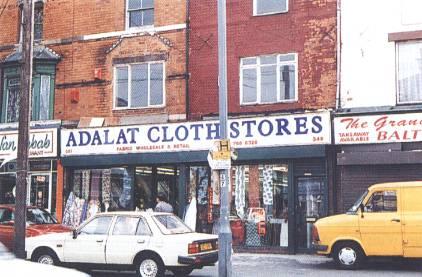
In the East End of London.


At the Forum in Rome.

Top 10 US Health Fraud Cases

Since 1986 False Claims Act judgments and settlements against fraud feasors have totaled over $12 billion. Below are the top 10 recoveries to date.

1) HCA -- $731,400,000 under the False Claims Act In December 2000,

HCA The Healthcare Company (formerly known as Columbia HCA), the largest for-profit hospital chain in the United States, pled guilty to criminal conduct and agreed to pay more than $840 million in criminal fines, civil penalties and damages for unlawful billing practices. Of this amount, $731,400,000 was recovered under the False Claims Act. Underthe settlement agreement, HCA's payment will resolve five allegations regarding the manner in which it bills the U.S. government and the states for health care costs. HCA 's frauds on the taxpaying public included: billing for lab tests that were not medically necessary and not ordered by physicians, "upcoding" medical problems in order to get higher reimbursements for more serious medical issues, billing the government for advertising under the guise of "community education," and billing the government for non-reimbursable costs incurred in the purchase of home health agencies around the country. Note that the December 2000 agreement does not resolve allegations that HCA unlawfully charged the U.S. Government for the costs of running its hospitals, and that it paid kickbacks to physicians to get Medicare and Medicaid patients referred to its facilities.

2) HCA -- $631,000,000 under the False Claims ActIn June 2003,

HCA Inc. (formerly known as Columbia/HCA and HCA – The Healthcare Company) agreed to pay the United States $631 million in civil penalties and damages arising from false claims submitted to Medicare and other federal health programs. This settlement resolves HCA's civil liability for false claims including cost report fraud and the payment of kickbacks to physicians. In a separate administrative settlement with the Centers for Medicare & Medicaid Services (CMS), HCA agreed to pay an additional $250 million to resolve overpayment claims arising from its cost reporting practices. Combined with the December 2000 settlement, the government has recovered $1.7 billion from HCA, by far the largest recovery ever reached by the government in a health care fraud investigation.

3) TAP [Taketa-Abbott Pharmaceutical] Pharmaceutical Products Inc. -- $559,483,560 under the False Claims ActIn October 2001,

TAP Pharmaceutical Products Inc. agreed to pay $875 million to resolve criminal charges and civil liabilities in connection with fraudulent drug pricing and marketing of Lupron, a drug sold for the treatment of prostate cancer. Of this amount, $559,483,560 was recovered under the False Claims Act. In addition, TAP pled guilty to a conspiracy to violate the Prescription Drug Marketing Act and paid a $290 million criminal fine, the largest criminal fine ever in a health care fraud prosecution. Under the Lupron scheme, TAP gave doctors kickbacks by providing free samples with the knowledge that the physicians would bill Medicare and Medicaid $500 per dose. At the time the Lupron fraud was discovered, Lupron accounted for 10% of the money spent on prescription drugs under Medicare Part-A. As part of the settlement, TAP entered into what prosecutors called a "sweeping" corporate integrity agreement.

4) Abbott Labs-- $400,000,000 under the False Claims ActIn July of 2003,

TAP,a unit of Abbott Laboratories, Inc. pled guilty to obstructing a criminal investigation and defrauding the Medicare and Medicaid programs and agreed to pay $400 million to resolve civil claims. In addition, the subsidiary of Abbott Labs, CG Nutritionals, Inc., agreed to a criminal fine of $200 million. The Abbott/CG Nutritionals scam involved the sale of enteral products which pump special foods into the stomachs and digestive systems of patients who, because of disease or some other disorder, are not able to ingest meals in a normal manner.

5) Fresenius Medical Care of North America -- $385,000,000 under the False Claims ActIn January of 2000,

Fresenius Medical Care of North America, the world's largest provider of kidney dialysis products and services, agreed to pay the United States $486 million to resolve a sweeping investigation of health care fraud at National Medical Care, Inc. (NMC), a kidney dialysis subsidiary owned by Fresenius. Of this amount, $385,000,00 was recovered under the False Claims Act. Three NMC subsidiaries also pled guilty to three separate conspiracies and were levied fines of $101 million. Fresenius has also entered into a corporate integrity agreement with the U.S. Department of Health and Human Services. The Fresenius/NMC scam involved fraudulent and fictitious blood testing claims by LifeChem, Inc., NMC's clinical blood testing laboratory, kickbacks to dialysis facilities to obtain blood testing contracts for LifeChem, and fraudulent claims submitted to Medicare for intradialytic parenteral nutrition (IDPN), a nutritional therapy provided to patients during their dialysis treatments.

6) SmithKline Beecham Clinical Laboratories Inc. doing business as GlaxoSmith Kline -- $325,000,000 under the False Claims Act (tie)In March of 1997,

SmithKline Beecham Clinical Laboratories Inc. (SBCL) was ordered to pay $325 million for filing of false claims relating to laboratory tests paid for in whole or in part by the federal government. SmithKline Beecham Clinical Laboratories also agreed to adopt a corporate compliance agreement. The multiple scams involved adding on laboratory tests not requested by doctors and which were not medically necessary, billing for lab tests that were not actually performed, giving kickbacks to doctors in order to get their business, and billing Medicare for dialysis testing already paid for by kidney dialysis centers.

6) HealthSouth -- $325,000,000 under the False Claims Act (tie)In December of 2004,

HealthSouth Corporation, the nation's largest provider of rehabilitative medicine services, agreed to pay the United States $325 million to settle allegations that the company systematically defrauded Medicare and other federal healthcare programs. Said Assistant Attorney General Peter Keisler, "HealthSouth's fraud on Medicare was driven both by longstanding business practices in its outpatient physical therapy business and improprieties in its inpatient rehabilitation business."

7) National Medical Enterprises-- $324,200,000 under the False Claims ActIn July 1994,

National Medical Enterprises Inc. was ordered to pay $379 million in criminal fines, civil damages, and penalties as part of a settlement in a case involving alleged Medicare and Medicaid fraud at psychiatric and substance abuse hospitals in over 30 states. The charges involved kickbacks to doctors for making referrals to the hospitals. Of the total $379 million settlement, $324,200,000 represented recoveries under the False Claims Act, and the rest represents criminal and civil fines.

8) Gambro Healthcare -- 310,000,000 under the False Claims Act In December 2004, Gambro Healthcare agreed to pay $310.5 million to resolve civil liabilities stemming from alleged kickbacks paid to physicians, false statements made to procure payment for unnecessary tests and services, and payments made to Gambro Supply, a sham durable medical equipment company. The settlement also requires Gambro to allocate $15 million to resolve potential liability with various state Medicaid programs. Gambro Healthcare has also entered into a comprehensive Corporate Integrity Agreement. The Gambro Supply Corporation, a wholly-owned subsidiary of Gambro Healthcare, has also agreed to plead guilty to to criminal felony charges; admit to execution of a healthcare fraud scheme; pay a $25 million fine; and be permanently excluded from the Medicare program.

9) Schering-Plough-- $292,969,482 under the False Claims Act In July 2004,

Schering-Plough, a major pharmaceutical manufacturer, agreed to plead guilty to fraud in the pricing of Claritin sold to the Medicaid program. The settlement agreement included a criminal fine of $52.5 million, $117 million to settle state claims, and nearly $176 million to settle federal False Claims Act claims

10) AstraZeneca Pharmaceuticals -- $266,127,844 under the False Claims Act In June 2003,

AstraZeneca Pharmaceuticals LP, a major pharmaceutical manufacturer, pled guilty to health care fraud and agreed to pay $355,000,000 to resolve criminal charges and civil liabilities in connection with its drug pricing and marketing practices with regard to Zoladex, a drug sold for the treatment of prostate cancer. Of this amount, $266,127,844 was recovered under the False Claims Act, and the remainder was levied as criminal fines. AstraZeneca pled guilty to giving doctors kickbacks by providing free drug samples knowing that the doctors would then turn around and bill Medicare and Medicaid hundreds of dollars per sample.

Insider is considering changing his job. Whistleblowing pays MUCH better!

Source: http://www.taf.org/

It's rude to shout!

The Merck lawyers in the second Vioxx trial should realise that body language and tone of voice often carries more weight with a jury than the words that are spoken (or shouted, in this case)! Remember the jury member at Michael Jacksons recent trial. A wagging finger was disliked and remembered.

http://www.rep-am.com/story.php?id=27606

Tuesday, September 20, 2005

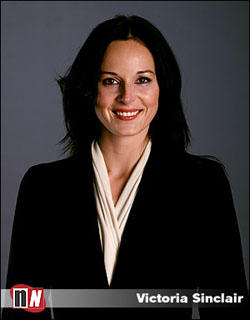
Victoria Sinclair


Victoria Sinclair, age 39, was the first webcaster to join NakedNews.com in September 1999, remaining until September 2001, then returning in November, 2002 once again as lead anchor. Her keen intellect, combined with her unparalleled grace and elegance, have cemented her spot as the cornerstone of the anchor team.

And what has this to do with Big Pharma spin. Not one thing. It's been a long day and Insider just felt you might be interested!

http://www.nakednews.com

Top 10 Reasons for seeing Drug Reps


Hat-tip: QFever.com

10.
Need foam model of thyroid to complete collection
9.
Always wanted to learn about congestive heart failure from non-medical personnel
8.
Green jelly beans that say "ZYVOX": 'nuff said
7.
Heart-wrenching display of brown-nosing offers unique insight into pathos of human condition
6.
Got previous drug rep from company pregnant; curious as to how kid's doing
5.
Free textbooks a virtual gold mine on eBay
4.
Drug rep misunderstanding of scientific data, misuse of medical terminology sure to boost physician self-confidence
3.
Rep from AstraZeneca able to obtain marijuana for 'compassionate' usage
2.
Mood starting to destabilize; more Zoloft samples urgently needed
1.
Two words: Nice boobs

Viva EL Presidente!

NEW YORK - Eli Lilly announced Tuesday that it has promoted John Lechleiter, who joined the company as an organic chemist in 1979, to president and chief operating officer. Lechleiter has also been made a member of the company’s board of directors. “The future is very much in our control,” says Lechleiter.

The promotion marks Lechleiter as a likely successor to Lilly Chairman and Chief Executive Sidney Taurel, who has headed the company since 1999. Before taking control of the company, Taurel spent three years as president and chief operating officer, and eight as a member of Lilly’s board. When asked whether he might be a contender for the top job at a company where he has worked since getting a Ph.D. in organic chemistry from Harvard, Lechleiter responded that the company would have no comment--and that his next job would almost certainly depend on how he performed in his new role. Lechleiter says he will run much of the drug giant’s day-to-day operations, allowing Taurel to focus more on big-picture strategy.

That will mean Lechleiter will help guide Lilly’s flagship pharmaceutical brands. He notes that the company has launched nine new drugs since 2001. Moreover, he argues, a big risk eased when Lilly won a court case that will prevent a generic version of its top-seller Zyprexa from reaching the market. The schizophrenia drug has annual sales of more than $4 billion. Lechleiter also notes that the company has settled the majority of product liability suits from patients who say they were not adequately warned that Zyprexa might cause diabetes.

Those cases were being argued by Chris Seeger of Seeger Weiss LLP, the same lawyer who is currently arguing the second case related to Vioxx, the withdrawn Merck (nyse: MRK - news - people ) painkiller, in Atlantic City, N.J. But even as risks related to Zyprexa’s patent life and litigation have abated, there is another concern: competition. Prescriptions for Zyprexa in the U.S. have dropped more than 20% even as the overall market for antipsychotics has grown.

The big question for Lilly: Can it stabilize the loss, or even turn the trend around? That has focused attention on a big study released yesterday of most of the major schizophrenia drugs, including entrants from Pfizer (nyse: PFE - news - people ), Johnson & Johnson (nyse: JNJ - news - people ) and AstraZeneca (nyse: AZN - news - people ). (See: "A Victory For Lilly--With Reservations.") But analysts are split on what the study, called CATIE, means for Zyprexa. It showed that the Lilly drug was most effective, but it also caused the most weight gain, as well as increases in blood sugar and cholesterol.

Lechleiter, however, sees no ambiguity in the results. “We couldn’t have written the script better,” he says. “We think it’s a huge win.” The battle over the antipsychotics market will be won in doctor’s offices, he argues, and he says that being able to say Zyprexa is most effective could translate into an advantage--even if the efficacy comes at a cost of some side effects.

Source: Forbes

Big Pharmas Big Problem

Some $100 billion worth of name-brand drugs will lose patent exclusivity in the next five years, with $21 billion going off-patent in 2006, according to Andrew Forman, analyst for WR Hambrecht & Co. The biggest-selling drug losing exclusivity in 2006 is Zocor, the cholesterol-reducing blockbuster from Merck & Co. that made $5.2 billion in 2004 sales.

The FDA are reviewing generic drug applications at an increasing rate:
364 in 2003
474 in 2004
771 in 2005 (anticipated).

Conversely, of the seventy-eight drugs approved by the FDA in 2002, only seventeen contained new active ingredients, and only seven of these were classified by the FDA as improvements over older drugs. The other seventy-one drugs approved that year were variations of old drugs or deemed no better than drugs already on the market. In other words, they were me-too drugs. Seven of seventy-eight is not much of a yield. Furthermore, of those seven, not one came from a major US drug company.

So, at the same time as old bockbusters come off patent, (and especially now, post-Vioxx) new potential blockbusters are becoming as rare as rocking horse droppings! Big Pharmas Research is both constipated and increasingly expensive. The irony is that for every $1 spent on R&D they spend $2 on sales and marketing. The US has 90,000 drug reps!

Will Big Pharma survive?

Yes, if it adapts. A case of Darwinism in action?

I'm not making this up!

Check out this illustrious publication.

http://www.dtcperspectives.com/next_month.asp

As you will see, its Editor-in-Chief is the perfectly named Mr Mark Tosh!

Do you think its fake?


The smile, I mean!

A meeting worth bugging!

NEW YORK, Sept. 20 /PRNewswire-FirstCall/ -- Pfizer Inc said today it disagrees with the conclusions stated in a non-approvable letter it received from the U.S. Food and Drug Administration regarding parecoxib sodium, a non-narcotic injectable COX-2 selective analgesic for the treatment of acute pain.The company plans to meet with the FDA to discuss the agency's concerns. Pfizer said parecoxib is widely available worldwide, including in the European Union, mostly under the brand name Dynastat.

Does it make you want to hurl?

GlaxoSmithKline has paid more than $150 million to settle government charges that the company fraudulently inflated the price of drugs purchased by federal health-care programs, the U.S. Justice Department said on Tuesday.
The settlement stems from allegations that the company violated the U.S. False Claims Act in the sale and marketing of Zofran and Kytril, two nausea drugs prescribed to patients undergoing cancer treatment, the department said.

Chump change? Maybe, but of the amount paid by GlaxoSmithKline, $26 million will go to whistle-blowers who prompted the investigation and another $10 million will go to state governments.

http://www.thestreet.com/_tsclsii/stocks/biotech/10243470.html

She looks a little Chile


Type in AstraZeneca into Google Images and look what pops up first!

Seriously, a hat-tip should go to AZ for getting the Frost and Sullivan 2005 Product of the Year Award for Arimidex (anastrozole), the daughter of tamoxifen.


Source: AZ Chile

CATIE contd.

The Pharma press releases are coming in thick and fast!

http://www.prnewswire.com/cgi-bin/stories.pl?ACCT=104&STORY=/www/story/09-19-2005/0004110510&EDATE=

http://www.prnewswire.com/cgi-bin/stories.pl?ACCT=104&STORY=/www/story/09-19-2005/0004110384&EDATE=

http://www.prnewswire.com/cgi-bin/stories.pl?ACCT=104&STORY=/www/story/09-21-2005/0004112384&EDATE=

http://www.eurekalert.org/pub_releases/2005-09/niom-nst091905.php

Scores so far........ 1 for Eli Lilly : 0 for AstraZeneca!

But there is a "hidden" reason why Lillys' Zyprexa might have shaved an advantage. When the clinical trial was designed, it was decided that patients in CATIE receiving Zyprexa could receive a dose that is higher than that recommended on the drug’s label. But that is not true for the others. If Zyprexa does come out ahead, competitors will jump all over this fact.

Insiders guess is that Pfizers' Geodon will make the most of the lack of weight gain.

Risperdal and Seroquel have yet to find an upside!

Here is the NEJM abstract (all that's read by many!):

http://content.nejm.org/cgi/content/short/353/12/1209

Quick Quiz contd.

Who described AZs' Nexium (esomeprazole) as "a triumph of marketing over science"?

GSK - Patently Obvious!

A patently obvious move by Europe's biggest drug maker, GlaxoSmithKline to try and protect its biggest selling combo inhaled asthma drug Seretide (Advair in the US), having global sales of US over $4 billion, was thwarted last year.

The patent granted to GSK, based on combining the two drugs in one inhaler, was challenged by the generic drug makers on grounds of obviousness.

The case was fought in London. The main grounds on which the patent rested was whether an inventive step was involved in combining the two older drugs, Flovent (fluticasone) and Serevent (salmeterol) to make Advair.

The delghtfully named Mr Justice Pumfray of the London High Court ruled that the combination was indeed "entirely obvious" and cancelled the patent. This victory for generic drug makers means that they could launch cheaper versions of the inhaled asthma treatment as early as October 2005.

Insiders' money is on those clever people at IVAX being the first to market! No wonder TEVA bought them for $7.4 billion recently.

An unplanned consequence


The Bush administration, in an ironic and cruel twist of politics, could be responsible for as many as half a million unnecessary abortions next year. Why? Because of the FDAs' stalling over the deregulation of Plan B.

OTC Emergency Hormonal Contraception has been a success in the UK. But it has turned into a political football in the US. This hot potato needs to be resolved asap!

Here is a review of the mess.

http://www.dailypress.com/news/opinion/dp-84926sy0sep18,0,555257.story?coll=dp-opinion-outlook

Quick Quiz

Which Big Pharma company, until recently, had more money than the GDP of Croatia resting in a bank account in the Republic of Ireland and why?

Monday, September 19, 2005

When will the lines meet?


Looks like around 2007/2008 to me. Now you may understand why I called myself The Insider!
Source: http://pharmamkting.blogspot.com/

CATIE.......psych!

Incoming spin, incoming spin........here is your three minute warning!

Four of Big Pharmas PR departments will be burning the midnight oil tonight.

The long awaited CATIE study by the US federal National Institutes of Mental Health compared the effectiveness and side effects of atypical antipsychotics from Eli Lilly (Zyprexa), Pfizer (Geodon), Johnson & Johnson (Risperdal) and AstraZeneca (Seroquel) with the generic drug perphenazine. The study (to be published in the next NEJM) has found little difference in the drugs' performance on the mental illness.

"Surprisingly, the older, less expensive medication used in the study generally performed as well as the newer medications," the researchers said.

Perphenazine "was as well tolerated as the newer drugs and was equally effective as three of the newer medications," they added. "Contrary to expectations, movement side effects -- rigidity, stiff movements, tremor, and muscle restlessness -- primarily associated with the older medications, were not seen more frequently with perphenazine...than with the newer drugs."

"The study has vital public health implications because it provides doctors and patients with much-needed information comparing medication treatment options," said Dr. Thomas R. Insel, director of the National Institutes of Mental Health. "It is the largest, longest, and most comprehensive independent trial ever done to examine existing therapies for this disease."

The message Big Pharma wont want disseminated is that a 40-year-old generic schizophrenia drug is just as good as name-brand ones that cost 10 times as much.

So, what might be their spin options?

1. Rubbish the study (difficult given its prestiege and the, industry created, expectation)
2. Divide and conquer (our drug was better in this patient subset or with this endpoint)
3. Ignore the study (a tactic successfully used with the ALLHAT study in hypertension)

Let's see what they do...............................

http://www.thestreet.com/_tsclsii/stocks/robertsteyer/10243285.html

Inhaled Insulin......Ooooh Errrr!


This looks much more fun than having a little prick every day!

Thin times for Exanta?

AstraZeneca and the Canadian authorities are "still talking" about whether or not Exanta (ximelegatran), its blood thinner which was knocked back by the FDA, will get a licence for longer term use (atrial fibrillation/stroke prevention).

Well , no news is good news, isn't it?

You are not going to believe this but......

This summary is not available. Please click here to view the post.

Ouch!


The Pfizer reps had christened it on CafePharma minutes after its withdrawal!

Hat tip to Placebo Journal.

Medical Blogs Grand Rounds

Please find below a link to the 51st Grand Rounds, a weekly collection of medical blogging. The posts are organized into a virtual gallery...so help yourselves to the hors d'oeuvres and wine and browse at your pleasure. All the works are free, written just for you.

Naturally, there are a number of posts about Katrina and her wake. But check out No15 on the list!

http://www.sneezingpo.com/2005SEP.html#2005-09-12T20:14:52-05:00

Sunday, September 18, 2005

O Poor Pfizer

Pfizer and their putative partners Ligand had their application for Oporia (lasofoxifene) rejected by the FDA this week.

Few details are emerging at the moment, but Oporia was supposed to be one of Pfizer's string of billion-dollar drugs - you know, the ones that they need every single one of to meet their growth targets. It's a selective estrogen receptor modulator (SERM) for osteoporosis, a useful therapeutic niche which at present is pretty much owned by Lilly.

Add to this the fact that Ligand are in the middle of some accounting problems (to put the matter delicately) that have led to an SEC investigation and their stock being recently delisted from NASDAQ and one could almost feel sorry for them.

Source: In the pipeline
http://www.corante.com/pipeline/

Vioxx - The Bitter Pill

The second Vioxx trial in the US has got off to a poor start for Merck. The company lawyers are making heavy weather of it already!

How many trials will Mother Merck fight individually before giving in to a Class Action suit?

They are 1:0 down already. Could it be a case of three strikes and then they are out?

Chris Seeger is doing a good job for the plaintiff so far.
http://www.seegerweiss.com/

Whistleblowers wanted!

A UK TV production company are wanting to speak to ex-Pharma employees who have worked for any of the larger corporations and would be interested in telling their stories as part of an upcoming BBC programme – please call Jess on 07971 256588 or email jeffrey.colmer@hotmail.com. (All correspondence will be kept completely confidential).

Source: No Free Lunch UK
http://www.nofreelunch-uk.org/

You want fries and a coke with that?


The American Academy of Family Physicians, one of the US's largest medical organisations, has denied No Free Lunch—an organisation of health care providers that encourages physicians to refuse gifts from industry—the opportunity to exhibit at its upcoming annual meeting in San Francisco.

In a letter to No Free Lunch’s Director Dr. Robert Goodman, AAFP’s Manager of Sales and Services Sharon Hutinett said that No Free Lunch’s position was “not within the character and purpose of the Scientific Assembly” and therefore did not meet the AAFP’s “eligibility requirements.” This despite the fact that the Coca-Cola Company (booths # 2321 & 2323), The McDonald’s Corporation (# 2425 & 2427), and The Distilled Spirits Council of the U.S. (# 527) will all be present at the meeting, and whose missions thus presumably are within the character and purpose of the assembly.

Over 5,000 physicians are expected to attend the meeting, and exhibitors are told on the AAFP website that “seven dedicated exhibit hall hours provide you with the opportunity for one-on-one access to these high-prescribing, qualified buyers!” If this is not enough, companies are provided with an array of sponsorship opportunities. For example: $17,500 buys granola bars (“in a custom designed bag that prominently features your logo”) that are placed in the “Doctor’s Bag” that are distributed to all registrants’ hotel rooms; $150,000 buys 50 custom-made banners that will adorn the shuttle buses taking attendees to and from San Francisco’s Moscone Center. As the AAFP notes on its website: “The supporter of the shuttle bus banners will also receive complimentary private coach service for its staff from the supporter’s main hotel to and from the convention center.” And of course, there’s free lunch: $60,500 pays for the food vouchers that physician-attendees will use for lunch each day at the conference. (see http://www.aafp.org/x32809.xml)

In April of this year, The American College of Physicians also denied No Free Lunch the opportunity to exhibit at its Annual Meeting in San Francisco. The ACP further prevented No Free Lunch members and medical students from distributing literature—in some instances using armed San Francisco Police—even when this literature was the ACP’s own guidelines on acceptance of gifts from industry.

No Free Lunch (http://nofreelunch.org/) is a not for profit organization whose mission is to encourage health care providers to practice medicine on the basis of scientific evidence rather than on the basis of pharmaceutical promotion. It discourages the acceptance of gifts from industry by health care providers, trainees, and students. Its goal is improved patient care. It was founded in 1999 by Bob Goodman, a general internist at Columbia University Medical Center in New York City.

Walking Boots

We will soon hear who has won the auction for Boots Healthcare International. Insider has just come off the phone from someone hanging on in there. Grim would be the word.
As is often the case, some employees have already walked......leaving their work to be picked up by those left behind. Others are clinging on; the Pharma Industry doesnt have many other options in that part of the UK (oop Norf).

So, down to the nitty gritty. Who and how much!

Who: GSK, the pharmaceutical giant, and Reckitt Benckiser, the cleaning products group, are believed to be among six bidders shortlisted. The others are understood to be Pfizer, the US healthcare giant, Johnson & Johnson, its fellow US rival, Novartis, the Swiss pharmaceuticals company, and Bayer, the German healthcare group.

How much: Its certainly going to be more than the £1.4 billion sanctioned by Bayers' board! What cheapskates! Look at the brands: Clearasil, Strepsils and Nurofen............

But is it just the highest bidder who will win? Boots have always cherished their "caring" image, especially towards their people. Could it be that an "asset stripping" higher offer by, say, GSK would be turned down in favour for a lower bid by, say, Reckitt Benckiser that included a promise to save more jobs?

We wont have too long to wait and see.................

Saturday, September 17, 2005

"Motivational" Sales Meetings at AZ US

"I found the most recent meetings to be very motivating. After our manager served us tropical punch flavored kool-aid, we listened to canned presentations and success stories. Thank goodness for these meetings, because I now know how to: -Think outside the box-Close on every call-See the right doctor with the right frequency with the right message-Do whatever it takes to get the business-Distinguish myself from other representatives-What kind of candy to give out this October at Halloween-And what costumes to wear/not wear when I trick or treat at my offices. I feel so enlightened and I am so ready to go out there and sell, sell, sell! The final close was our manager saying "Happy selling!" ".

LOL

I think this reps tongue is most firmly in her cheek. And we Brits think that Americans dont do irony!
Source: CafePharma
http://www.cafepharma.com

How True 2

How True!

Winners at ASCOT?


The ASCOT BPLA study is certainly stirring up the exciting (yawn) world of hypertension management.

At first glance it would appear to be a resounding success for "newer" treatments, which romped home ahead of the "older" ones.

But wait...........................I detect the odour of spin! Could it be that there is another possible explanation for the results? Well, lets wait and see. The Great and the Good of UK hypertensionology are due to gather soon to decide on a way forward. That's assuming they can find a room big enough!
Find out more about ASCOT BPLA here:
http://www.eshonline.org/journal_highlights/2005_set_art1.asp

ps Check out the "Editorial Comment". I hope Robyn did as asked.

And here is another view from No Free Lunch UK:
http://www.nofreelunch-uk.org/ASCOT.doc

Pfired


Looks like some enterprising rep has seen the writing on the wall and decided to branch out. To find out more go to http://www.iwaspfired.com

Drug Reps at Play


I love CafePharma. Pharma reps can be so.........indiscrete!
Check it out at http://www.cafepharma.com

PharmaGossip

Welcome to PharmaGossip. This blog will look at the pharmaceutical industry with a seasoned, if not cynical, eye and will provide some insights into what is happening (and why) in Big Pharma. Spin will be sniffed out and gossip encouraged!