Merck KGaA said it has entered a definitive agreement to buy Millipore Corp. in a cash deal valued at about $7.2 billion.
via businessweek.com
A new prescription for marketing drugs
A number of states have started programs using drug companies' sales strategies to bring doctors a different message about what medications they should prescribe. Gregory Warner reports.
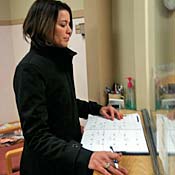
Kristin Nocco waits to see a doctor during one of her visits as an academic detailer for the state of Pennsylvania. (Gregory Warner / Marketplace)
More on Health
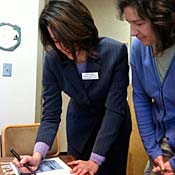
Kristin Nocco, left, and Dr. Lisa Galante.
TEXT OF STORY
Kai Ryssdal: With an, if you can't beat them, join them story... It's about health care. Face time, as they say in sales, is one of the best ways to push a product. And nobody knows that better than drug companies. They've got almost 80,000 pharmaceutical sales reps out there. That's one for every five doctors. And they are very good at what they do.
Sales of brand name prescription drugs in this country are worth billions of dollars a year. Thing is, states pick up a lot of that tab through programs like Medicare and Medicaid. Obviously, they're looking to hold down costs anyway they can, which brings us to the join them part. States using drug company sales strategies to bring doctors a somewhat different message.
From our health desk at WHYY in Philadelphia, Gregory Warner reports.
GREGORY WARNER: Kristin Nocco works for the state of Pennsylvania as an academic detailer. Her job is to visit doctors and give them a rundown of the latest independent research on which drugs and other treatments work best for different conditions. The idea is to let doctors see how that expensive, brand name drug stacks up against the older, cheaper one. If, that is, Kristin can get through the door.
KRISTIN NOCCO: You're dealing with front office staff who are used to dealing with a drug rep, "Hi, I'm from Lilly. Oh, hi, I'm from this oxygen company." And now I'm this person who doesn't have samples who... am I working for the government? To give the doctor education? It was a hard concept to get around.
The doctor's staff is so used to hearing a sales pitch, the fact that Kristin doesn't have anything to sell makes her suspect. Many times she's been turned away.
And so, Kristin approaches every doctor's office kind of like a fortress that must be scaled.
Eight thirty in the morning. She pulls her minivan into a doctor's parking lot. She jumps out in a blue business suit.
Opening a pack of gum with one hand, she pulls an information booklet from a crate of brochures with the other, and wedges a five-pound bag of peppermints under her arm.
NOCCO: Give me my bag of mints!
WARNER: Mints? Is that crucial?
NOCCO: Every office, everyone wants a little mint, a little candy. I think it's important to give someone something.
Kristin has a lot of practice getting into doctor's offices because for years she worked as a sales rep for the drug company Eli Lilly. She sold Prozac, and Humulin, and something called Ceclor. She was that drug rep you've seen cruising into the doctor's office, kibitzing with office staff, passing out freebies.
NOCCO: Here's some pens for you or here's some sticky pads, or, I got a mug that you'll love.
All that stuff that's illegal today.
NOCCO: Hi, Dr. Galante.
Now Kristin walks into the office armed with nothing but an information packet. And mints. She's a familiar face now. The doctor leads us right in.
LISA GALANTE: It's a little chilly still in here, sorry.
NOCCO: Well, I have my thermals on today!
Lisa Galante is a busy primary-care doctor. Like all the doctors in this education program, she sees a lot of elderly patients, prescribes a lot of drugs. And she tells me something most doctors aren't so eager to admit.
GALANTE: You don't have time as a doctor to verify what everybody's telling you, you just kind of smile and sign for the samples! I mean basically in a rush rush rush rush! And Kristin comes in and gives you data looking at all the kind of summary of the research that's out there.
The summary that Kristin presents is produced by Harvard. But you can tell someone's worked hard to make it seem not so Ivy League. The idea behind academic detailing is to present the most respected research using the snazzy marketing of the drug companies. It's glossy and colorful, with bullet points and simple charts easy to reference for a busy doctor.
GALANTE: So I feel like I'm getting non-biased information. I'm not just picking a drug because a drug rep put it in my head. I'm choosing it for the right reasons.
TOM SNEDDEN: The industry's trying to sell a product. What we're trying to sell is clinically-appropriate prescribing.
That's Kristin's boss, Tom Snedden. He runs a program for the state of Pennsylvania that helps low-income seniors pay for drugs. He's hired 11 academic detailers like Kristin. Compared to Pennsylvania's 8,000 drug reps, he says...
SNEDDEN: It's a very small band of guerrillas.
Small but effective. Since the program began in 2005, the doctors who have met with academic detailers have prescribed fewer brand name drugs and fewer drugs overall. Snedden told me the savings offset the million-and-a-half dollars a year the state spends on the program.
Kristin says she's not there to sway doctors off expensive drugs. She's there to give them the information they need to make the best choice.
NOCCO: So now I've validated what you're doing. You're not doing it bad by choosing the cost-effective option.
It's a strange world we live in when non-biased information needs its own sales rep. And yet, 10 states now have programs like the one in Pennsylvania. A bill making its way through Congress -- separate from health care reform -- would establish these programs around the country.
It's not going to reduce the marketing by drug companies, of course. It just gives a little more face time to the other side.
In Philadelphia, I'm Gregory Warner for Marketplace.
How closely do the great and the good, for example, scrutinise the promotional material for medical drugs? The latest paper looking at this question is published this month.
Researchers in Holland went through the world's biggest medical journals – the Journal of the American Medical Association, Lancet, the New England Journal of Medicine, and so on – between 2003 and 2005. Adverts were included, once each, if they made a claim about the effect of a drug. For all the claims, they checked the references, found the trials referred to, and gave them out to easily exploited assessors: 250 medical students who'd just finished their evidence-based medicine teaching.
Each student independently assessed two trials, and associated adverts, following a questionnaire and a well-established scoring system to assess quality of trials. Scores were given for factors including:
• Whether the method of randomly assigning patients to one treatment or another was adequate, and clearly described.
• Whether patients could know which treatment they were getting.
• Whether drop-outs were appropriately included in the analysis, and so on.
These are good measures of whether a trial is a fair test of a treatment.
By now you will rightly be worrying that medical students – although cheap and easy to come by – are not reliable raters, so you will be pleased to hear that each trial was scored by between two and six students, and any discrepancy reviewed by a panel of four academics.
The results were abysmal. Only half of the claims in the adverts were supported by the specific trials referenced and, of all the trials, only 55% got a score of "high quality". Overall, only 39.2% of these adverts referenced a high-quality trial which supported their claim.
This is not the first time such a study has been conducted. Villanueva and colleagues, in 2003, published a paper in the Lancet assessing claims for cardiac medication adverts in six Spanish medical journals: of the 102 references they could trace, 44% did not support the promotional statement. Similar results have been found in psychiatric drug adverts, and in the field of rheumatology.
To offset any suggestion that I am cherry-picking, a review in the Public Library of Science's open access journal PLoS One found 24 similar studies, and overall only 67% of the claims in adverts were supported by a systematic review, a meta-analysis or a randomised control trial.
Pic - Richard Sackler, co-chairman of Stamford, Connecticut based Purdue Pharma and adjunct professor of genetics at Rockefeller University.
When drugs maker Wyeth Australia wanted its arthritis drug Enbrel listed on the pharmaceutical benefits scheme (PBS) it hired political lobby group Parker & Partners to wheel out sick kids in its meetings with politicians.
The image of arthritic 10-year-olds, together with the threat of a bleeding heart media campaign, was so potent that Enbrel was rushed on to the PBS under the watch of then federal health minister Kay Patterson, at a cost to Australian taxpayers of $100 million a year.
Getting a government subsidy for a drug through a listing on the PBS is the Holy Grail for big pharmaceutical companies.
Companies spend an average $1.2 billion getting a product to market, so making that pay off is the name of the game.
In the case of Enbrel, the cost of a yearly prescription was estimated at a prohibitive $25,000 back in 2003. Throw it on the PBS list - 600 drugs subsidised by the government - and the cost falls to $5.30 per prescription for healthcare cardholders and $32.90 for other patients.
If doctors are "educated" to prescribe the drug and the pharmacy chains stock the pill, then sales go up and up.
Welcome to the $100 billion health sector, one of the most powerful and complex industries in the country. It represents more than 10 per cent of gross domestic product, employs hundreds of thousands of people, and as the population lives longer, its tentacles grow stronger.
Pharmaceutical companies are among the biggest in the world, with annual turnovers in the tens of billions of dollars and lucrative recurring revenue streams.
While pharmaceutical companies outlay millions of dollars a year on grants and sponsorships to doctors and health groups, the industry spends far more on political donations in an attempt to influence health policy and get their drugs on to the PBS.
Australia's PBS system is world renowned for making drugs for serious illness available cheaply. But the system, which costs $7.7 billion a year, and the process by which drugs are listed has become increasingly vulnerable to commercial and political pressure.
While the PBS scheme is overseen by an independent gate keeper, the Pharmaceutical Benefits Advisory Committee (PBAC), strong lobbying by the huge GlaxoSmithKline and home-grown drug manufacturer CSL, particularly during the later years of the Howard Government, succeeded in securing listings on the PBS for drugs that had earlier been rejected.
CSL's anti-cervical cancer drug Gardasil was one case in point. John Howard promised the drug would make it on to the PBS despite its application being rejected by PBAC some months earlier. GSK's version of the drug was also knocked back by PBAC but the Howard government eventually approved it for a nationwide vaccination program.
An investigation by BusinessDay has traced the millions of dollars spent annually by the health industry - which spans everything from pharmaceutical companies, hospitals, pharmacy chains, general practitioners and health insurance companies - buying political access and influence. The money mainly goes to lobbying, hiring former government staffers both internally and externally, issuing ads and making grassroots campaign contributions.
More than any other industry, drug companies take advantage of a revolving door between the industry and politicians and their staff. A search of where former political staffers go reveals a disproportionate number move to the lucrative health sector.
Jerrold Cripps, QC, who recently ended his five-year term at the NSW Independent Commission Against Corruption, said on his departure that political donations and lobbying by former ministers and other members of Parliament ''are activities that are unmistakably conducive to corrupt conduct''.
Dozens of former government staffers and former politicians are employed as lobbyists for drug companies and health associations, or work on the health accounts of PR firms.
For instance, Kate Carnell, the former ACT chief minister, mostly under the Howard Government, left politics at the start of this decade and became chief executive of the powerful doctor's lobby group GP Network.
Carnell was recently poached to become chief executive of the Australian Food and Grocery Council, which represents supermarket heavyweights Woolworths and Coles. But her move to retailing was not really a sea change. The nation's supermarkets are stepping up efforts to change legislation that would enable them to sell drugs in their stores.
Then there is former South Australian health minister Michael Armitage, who now runs the Australian Health Insurance Association, the private health industry body that represents 26 health funds throughout Australia and collectively covers more than 94 per cent of the private health insurance industry.
AHIA member funds today provide healthcare benefits for approximately 11 million Australians. The power of this organisation became apparent last year when it revealed it had received a letter from then opposition Leader Kevin Rudd four days before the November 2007 election setting out policy commitments to the industry, including retention of the private health insurance rebate.
While there has a backflip by Rudd on the health rebate, the real story was the ability of this lobby group to extract a letter out of a political leader days before an election, detailing his party's policy.
As Richard Denniss, executive director of lobby group The Australia Institute said: "For me the most interesting question is why the then opposition Leader was making these private promises to the health insurance industry.
"It's obviously a pretty powerful organisation than can demand such promises be made in the days before an election. I haven't seen the environment groups waving secret letters around in which the ALP makes them promises about how they will tackle climate change.''
With the emissions trading scheme now seen by all political parties as a poisoned chalice, the focus will increasingly turn to the health sector, with the ownership of hospitals and other health-related matters to be fought out in the lead-up to the next election.
In recent weeks, opposition Leader Tony Abbott has spruiked the idea that Medibank Private would be privatised under a Liberal government and every major public hospital in NSW and Queensland would be given its own management board to make hospitals more accountable.
There is no doubt that the drug industry lobbyists are well connected, on both sides of government.
Wyeth's spin doctor is Peter Poggioli, who was state director of the Liberal party under Jeff Kennett and who also worked for former Howard government minister David Kemp.
Poggioli is married to Rowena Cowan, who worked for former Liberal senators Nick Minchin and Richard Alston and now works at Sanofi Aventis as government relations manager.
A search of any of the big health associations reveals some heavyweight appointments from former politicians and political staffers.
A former staffer with NSW senator Bill Heffernan, Nick Campbell, is executive director of corporate and government affairs for Johnson & Johnson; Mark Elliott, a former adviser to Phillip Ruddock and Ian McDonald, works at Pfizer; and David Miles, a former adviser in John Howard's office, is the communications boss at Pfizer.
Brendan Shaw, head of Medicines Australia, the peak group for drug manufacturers, previously worked with then minister for small business and consumer affairs Craig Emmerson when Labor was in opposition.
Then there is Catherine McGovern, a former staffer in SA Liberal senator Nick Minchin's office, who now works for GlaxoSmithKline, and Nicole Feely, a former senior adviser in John Howard's office, who went to work for tobacco giant Phillip Morris in 2001, became chief executive at St Vincent's Hospital in Melbourne, then moved to Western Australia as chief of Southern Metropolitan Area Health.
As Denniss said: "There appears to be a tight-knit group of ex-politicians, and
ex-political advisers with experience in health who seem to circulate around the different health lobby groups.
"They seem to get quite well paid for whatever it is they do so obviously the big pharmaceutical companies and the other big health lobby groups think they get good value for money out of employing people with their knowledge of government processes."
It is a concern expressed by several current and former politicians, academics and commentators.
John Warhust, a professor in the school of political sciences at Australia National University, described these relationships as "incestuous" and detrimental to the democratic process. "There should be some form of control over this cosy lobbying network and government," he said.
Toby Ralph, a marketing strategist for several blue-chip boards and who has worked on more than 40 election campaigns in Australia, is well aware of the attraction of lobbying and the pharmaceutical industry.
"The pharmaceutical industry is awash with cash, much of it siphoned from the taxpayer. Approved medicines share $6 billion or $7 billion, so dipping the corporate bucket into that deep well is always a priority," Ralph said.
"The starting point is to prove medical efficacy and social and economic benefit, but that just secures a seat at the roulette table. Next they hire people with strong connections to the decision makers."
Then there are the specialist advertising agencies and PR consultancies that put together compelling cases for subsidy.
"This transcends the factual,'' Ralph said. ''They can bring in sufferers to meet the decision makers, humanising the decision."
According to Ralph, while decision makers are obliged to look for the most cost-efficient health outcome and there are complex evidence-based review systems, it's tough to say no to funding a high-priced cancer drug when you've been confronted by an eight-year-old who may die if she doesn't get it.
"Drug pushing is a high-risk game, but if a company secures a government subsidy it is potentially a long-term licence to suck on the teat of the taxpayer for a quarter of a century until patents evaporate," he said.
The pharmaceutical industry spends a fortune on marketing and promotion - nearly twice as much as it spends on research and development. Pfizer is estimated to spend well above $17 billion a year to maintain and increase its 10 per cent market share.
Greens MP Lee Rhiannon said big pharmaceutical companies were also some of the biggest financial backers to major parties. "Pfizer has donated $572,560 and Medicines Australia has donated $392,386 to the major parties. What did they seek in return?"
Ms Rhiannon said political donations from the health industry to federal Labor shot up and then overtook those to the Liberal party after the 2007 election.
These shifting fortunes suggest that the donors from the private health sector have an interest in backing the party in government.
''It's time the Rudd government swallowed the bitter pill and put an end to corporate donations so they can no longer be used to buy influence," she said.
One of the country's largest drug companies, Pfizer Australia, which last year bought Wyeth, has a gaggle of former government advisers working in its lobbying, media and marketing division. It donated to political parties last year, is a member of the Millennium Forum, which was set up in NSW in 1998 to raise money for the Liberal Party. The forum at present pulls in at least $700,000 from subscriptions alone.
The powerful Pharmacy Guild of Australia, a lobby group for pharmacies, is a big donor in its own right, having handed over $447,000 to Labor and $528,000 to the Coalition over the past decade. However, since 2007 its donations to Labor have steadily outpaced those to the Liberal Party.
At the start of last year, GSK announced a new global policy to voluntarily stop all corporate political contributions, a move aimed at countering the impression it was seeking to buy political influence.
However, GSK continues to use external and its own lobbyists while its executives are free to provide personal donations.


Click to bigify
LONDON, Feb 26 (Reuters) - Britain's state health service should ditch some drugs that are not worth using, including AstraZeneca's (AZN.L) top-seller Nexium for heartburn, to provide funds for new treatments, experts said on Friday.
Dyfrig Hughes of Bangor University and Robin Ferner of Birmingham's City Hospital said such medicines could be relegated to a blacklist of products that cannot be prescribed on the National Health Service (NHS).
Their suggestion, in an article in the British Medical Journal, underscores a growing debate over value for money in healthcare.
Britain's National Institute for Health and Clinical Excellence (NICE) has taken a global lead by recommending which drugs should be reimbursed on the NHS, using a systemised approach that is watched closely by other countries. Continued...
 Shares in the German pharmaceutical group Bayer, maker of Aspirin, plunged Friday after the group reported poor 2009 results amid what it called a difficult environment.
 A New York state judge has refused to throw out the $22.5 million verdict awarded by a Staten Island jury in a 28-year-old polio vaccine suit. Last year, the jury found Pfizer Inc., as successor to Lederle Laboratories, liable for negligent manufacture of the oral polio vaccine from which plaintiff Dominick Tenuto allegedly contracted polio while changing his infant daughter's diapers in 1979.
Justice Joseph J. Maltese on Staten Island declined to set aside the verdict. "This was a unique case for which there does not exist comparable facts or awards within this state. Dominick Tenuto has sustained almost 30 years of past pain and suffering before having his day in court. He had physical and psychological injuries as a result of his contracting polio. It cost him his job, his marriage and the loss of enjoyment of life," wrote Maltese. "[W]ith 30 years of past pain and suffering with polio, and another 20 years of future pain and suffering, as well as the prognosis of constant care due to the physical and mental conditions of post polio syndrome, this court does not find the jury awards to be excessive."
Benedict Morelli of Morelli & Ratner served as lead trial counsel for Tenuto. J. Peter Coll of Orrick, Herrington & Sutcliffe served as lead counsel for Lederle and Pfizer.
 I want to believe in America's pharmaceutical companies. I want to believe that people in these companies believe that the best strategy for success is to do what is best for patients. I want to believe that they are interested in scientific truth and eager to know of any safety issues and ready to share that information with the public.
 This week I was disappointed again.
Over the years GlaxoSmithKline has repeatedly reassured the public about the safety of its blockbuster diabetes drug Avandia. But this weekend the Senate Finance Committee released a report revealing that inside the company Glaxo's own experts and advisors were raising concerns about whether the drug could cause heart problems all along.
The report, based on more than 250,000 internal documents, provides a rare and unsettling glimpse into the decision by company executives to deflect safety issues--even as their own experts agreed with conclusions of outside researchers who were warning the public about possible harms.
The documents reveal that company researchers were deeply concerned about the cardiovascular safety of the drug as far back as 2003. The pages of the Senate report read like a spy novel: Glaxo receiving confidential documents leaked by a sympathetic academic who consulted for the company; the company embarking on a campaign to intimidate critics who warned about potential safety issues with the drug; and executives pulling strings to release data early from a scientific study that was supposedly controlled by an "independent" committee of researchers.
While Glaxo was publicly downplaying safety worries, a company statistician indicated that concerns raised by critics, including Cleveland Clinic cardiologist Steven Nissen, were legitimate. In one internal document the head of research states that analyses from the FDA, Nissen and GSK all suggested that Avandia could be causing heart attacks. Meanwhile, Glaxo's media relations department was telling the public that there was no link between the drug and heart disease.This type of behavior is eroding the public trust in the pharmaceutical industry. The fix is simple: Once a drug is approved, all data relevant to drug safety should be placed in the public domain and independent investigators across the country should be able to use it. There should be big financial penalties for withholding relevant information. Drug studies sponsored by industry must be truly independent--outside of company control. Companies should give outside investigators independence over every aspect of the study. There are too many examples of companies wresting control of clinical studies from their consultant investigators for reasons that seem more related to product promotion than clinical science.
And on all sides there should be a commitment to protect against the intimidation of academics who are willing to raise questions about the safety and effectiveness of company products. The free flow of information about the effects of drugs and medical devices will best serve the public's interest.After more than six hours of deliberation, a Philadelphia jury unanimously returned a defense verdict Wednesday in a lawsuit alleging that a hormone replacement therapy drug caused breast cancer in an Indiana woman who died of the disease.
The verdict in favor of drugmaker Wyeth came because the jury found a lack of factual causation of Cheryl Foust's disease by her use of the HRT drug Prempro.
The defense in Foust v. Wyeth, however, did not get all of the answers it wanted on the questions presented to the jury.
The jury found that Wyeth negligently failed to adequately warn Foust's prescribing nurse practitioners about the risk of Prempro, and that the negligent failure to warn was a causation factor in the nurse practitioners prescribing Prempro to Foust.
In an unusual aspect of the case, Foust's identical twin sister, Carol, took an HRT drug but did not get breast cancer. Both the plaintiffs and the defense sought to use Carol Foust's lack of cancer to their advantage in making arguments to the jury.
"The fact the jury failed to find specific causation is difficult to understand," said plaintiffs attorney James A. Morris Jr. of the Morris Law Firm, which has offices in Philadelphia and Austin, Texas.
Morris said the verdict doesn't change the fact that Prempro causes breast cancer and he welcomed the jury's finding that Wyeth failed to adequately warn of the breast cancer risks of Prempro.
Wyeth, now owned by Pfizer, said in a statement: "While we have great sympathy for Mrs. Foust's family, we believe the facts in this case confirm our position that Wyeth acted responsibly by conducting or supporting more than 180 studies on hormone therapy's benefits and risks, and provided proper, accurate and science-based information to the patient and her doctor, who made an informed decision to proceed with this treatment. Many risk factors associated with breast cancer have been identified, but science cannot establish what role any particular risk factor or combination play in any individual woman's breast cancer."
The jury started deliberations Tuesday. Philadelphia Common Pleas Senior Judge Esther R. Sylvester presided over the almost four-week trial.
The verdict disrupts the streak of plaintiffs' wins before Philadelphia Common Pleas juries in hormone replacement therapy mass tort cases.
Philadelphia juries have awarded as much as $75 million in punitive damages in the other HRT cases. The $78.7 million damages award in Barton v. Wyeth was remitted by Senior Judge Norman Ackerman to $10.6 million, but Ackerman found that it was reasonable for the jury to find Wyeth, now owned by Pfizer, wantonly negligent.
The verdict in Foust comes on the heels of a jury verdict Monday in Singleton v. Wyeth in which a jury found Wyeth liable for $3.45 million in compensatory damages and $6 million in punitive damages for an Alabama plaintiff's injuries.
Except the just-returned Singleton verdict and one other plaintiff's verdict awaiting a trial judge's decision on a $28 million punitive damages award and other post-trial motions, the other plaintiffs' verdicts have headed to the appellate courts or are pending in the appellate courts. Three of those plaintiff verdicts were later set aside by judges.
Of the more than 1,500 HRT cases pending in Philadelphia, fewer than 10 have gotten to trial so far.
Foust, of Abington, Ind., died at 56 after her breast cancer metastasized. Foust's widower, Stephen Foust, was also a plaintiff in the case.
Plaintiffs' counsel said Foust took Prempro, Wyeth's drug combining estrogen-progestin, a synthetic form of progesterone, from 1999 to 2003, while defense counsel said prescription records only established that Foust took Prempro for two years and two months.
The plaintiffs' theory was that postmenopausal women like Foust with already-damaged breast cells have the growth of their damaged cells fueled into malignant breast cancer by taking hormone replacement therapy drugs, according to arguments. During closing arguments Tuesday, Morris argued that Foust had her estrogen and progesterone hormonal levels go down dramatically, and that it is only because of the ingestion of a hormonal drug like Prempro that Foust's breast cells with receptors for estrogen and progesterone turned into cancer.
Defense counsel Beth A. Wilkinson, of Paul Weiss Rifkind Wharton & Garrison's Washington, D.C., office, said during her closing Tuesday that plaintiffs did not present "good science" about the state of knowledge regarding the development of cancer. The plaintiffs had no evidence that a normal cell can be turned invasive, or malignant, by hormone therapy, Wilkinson said. Foust had an "incredibly aggressive tumor," Wilkinson said.
During closing arguments, Morris said that when evaluating the alleged negligence by Wyeth, the jury should consider that there were many indications starting in the 1970s that there may be an increased breast cancer risk from using Wyeth's hormonal drugs. And Wyeth did not sponsor its own studies of the possible breast cancer risk and Wyeth downplayed the research concluding there was a serious risk, Morris said.
It was not until the release of the news that a government-sponsored study, the Women's Health Initiative, was being discontinued in 2002 because of an increased risk of breast cancer from using HRT that there was an answer to the question of whether HRT raised the risk of women getting breast cancer, Morris said.
All three of Foust's nurse practitioners testified that their perception of the risks of HRT changed after the release of the WHI, Morris said. And Foust said that she would not have taken HRT if she had received information from her nurse practitioners about how the risk-benefit calculation changed regarding HRT following the release of the WHI results, Morris said.
Foust talked year in and year out with her treating nurse practitioners about the risks and benefits of HRT, Wilkinson said in her closing.
Defense counsel also include, among others, F. Lane Heard III of Williams & Connolly's Washington, D.C., office.
Cohen & Malad in Indianapolis, Ind., also is plaintiffs' counsel.

The National Institute of Health and Clinical Excellence has published new guidance for the month of February 2010.
There is one guidance document that has an impact in primary care. Public health guidance has been published regarding school-based interventions to prevent the uptake of smoking among children.
This guidance recommends that information on smoking is integrated into the school curriculum, smoking policies should support both prevention and stop smoking activities and that these activities are coordinated with outside agencies.
NEW YORK
Three major U.S. drugmakers, Eli Lilly and Co., Merck & Co. and Pfizer Inc., said Tuesday they have formed a not-for-profit company in Asia to focus on cancer research and treatments.
The companies said they formed the Asian Cancer Research Group to focus on the most commonly diagnosed cancers in Asia, including lung and gastric cancers.
They did not say in a news release how much funding they were committing to the project.
Over the next two years, Lilly, Merck and Pfizer said they will create an extensive database that will be made available to researchers.
"The goal of the Asian Cancer Research Group is to improve the knowledge of cancers prevalent in Asia and to accelerate drug discovery efforts by freely sharing the resulting data with the scientific community," the companies said.
They said as many as 40 percent of patients with lung cancer in Asia demonstrate a mutation that is relatively rare in Western patients, suggesting a different research approach is needed for developing treatments. Meanwhile, the companies said gastric cancer is the second largest cause of cancer death in the world, killing more than 630,000 patients per year, more people than all cancers combined in the United States.
Eli Lilly is based in Indianapolis, Merck is based in Whitehouse Station, N.J., and Pfizer is based in New York.
All for one and one for all!
How's this going to work when a new therapy is discovered?
A Philadelphia state-court jury deliberated a few minutes before deciding that Wyeth should pay $6 million as punishment for failing to warn Audrey Singleton, a retired school bus driver from Chatom, Alabama, of the risks of the drug. The jury ruled earlier today that the company owed Singleton and her husband $3.45 million in compensatory damages.

Is that a voice recorder in your pocket Dr Nissen - or are you just pleased to see GSK?
Ike Iheanacho, editor, Drugs and Therapeutics Bulletin
AstraZeneca is in the dock for its lack of openness about one of its multibillion dollar drugs. A new documentary about the case impresses Ike Iheanacho
A trillion here, a trillion there, and pretty soon you’re talking real money. The original version of this maxim ("A million here, a million there . . ."), usually cited as the words of the late US senator Everett Dirksen in the 1960s, remains a beautifully sarcastic condemnation of careless spending. But obviously it’s also out of date, partly owing to the ravages of inflation. Today even a billion of any currency barely has the power to shock or awe, albeit that (or perhaps because) these sums are way outside the experience or understanding of most people.
So the received wisdom that it now takes more than a billion dollars to develop a new drug might provoke yawns not gasps, particularly in a macroeconomic climate where finance ministers wouldn’t get out of bed to borrow any less. In truth, of course, this amount is huge in anybody’s language. And it helps to explain, if not excuse, just how far drug companies will go in seeking a return on their high risk investments, as Ann Alexander discussed in her File on 4 documentary, Listen here"Why a Drugs Firm Faces Court Action."
In the dock here was AstraZeneca, said to enjoy annual global sales of over $31bn (£19.2bn;  22.2bn), around a seventh of which is for the atypical antipsychotic drug quetiapine fumarate (sold in the United Kingdom as Seroquel). The central charge was that, to ensure such revenue, this company and its agents had found creative ways to hide or downplay clear evidence that the drug commonly caused weight gain and diabetes mellitus. In turn the company has denied any wrongdoing of this kind.
This type of story usually has a stock set of supporting characters, circumstances, and plot, all well represented in the programme. These included, for example, the sobering mini-histories of patients in the United States who were allegedly harmed by the drug; the actions and influence of a well rewarded opinion leader; unimpressive features of the regulatory system; and lawyers sniffing the company’s blood. This isn’t intended as criticism or to suggest boredom for the listener; quite the opposite, as the result was an excellent broadcast on a potentially tricky area.
Attempts to examine supposed drug industry shenanigans, especially on radio, can easily be overwhelmed by a mass of technical detail, the often tortuous and protracted sequence of events, and contestable speculation about companies’ motives and actions. This programme neatly avoided these traps by paring down the tale to essentials and majoring on hard facts.
This was just as well, because AstraZeneca declined to be interviewed, offering instead what sounded like a carefully worded written statement. Although unhelpful, this no-show hardly proved guilt. But much less dismissible was the information suggesting how the company may have manipulated and misused its own data on quetiapine.
Most telling, perhaps, were various in-house communications flushed out by ongoing lawsuits relating to the drug. These included, for example, one employee commenting in 1997 (just before the product’s launch) on the markedly consistent findings of weight gain in clinical studies, long before the product’s label was changed to reflect this risk. Another employee unashamedly wrote of how whole studies had been usefully "buried" and anticipated strategies that AstraZeneca would have to employ when this skulduggery came to light.
The conflict between promotional marketing and scientific standards in this case was highlighted by John Blenkinsopp, AstraZeneca’s former UK medical director. He claimed that he was put under great pressure by marketing colleagues to accept that quetiapine was not associated with weight gain, something he was unwilling to do, given that it was so flatly at odds with his own reading of the research. Unlike in the US, in the UK quetiapine was not in the end marketed on the basis of "favourable weight profile" or "minimal weight gain," save for a single advertisement in one journal in 2004. Predictably, perhaps, in view of testimony such as Dr Blenkinsopp’s, the company declined to comment specifically on former employees.
This tale still has a way to run, with more legal action on behalf of patients due in US courts next month. So despite the assertions that it has done nothing wrong, AstraZeneca may end up paying heavily for a lack of openness. But, hey: what does a billion here or there really matter?
Cite this as: BMJ 2010;340:c604
BBC Radio 4, 26 January, 8 pm (repeated 31 January, 5 pm)
Rating: ***
The U.S. attorney's office in Boston said Monday that Eon Labs Inc., a subsidiary of Swiss company Novartis AG, submitted false reports to the government between April 1999 and September 2008 that misrepresented Nitroglycerin SR's regulatory status and failed to advise that the drug did not qualify for Medicaid coverage.
Prosecutors say Eon Labs did so even after the Food and Drug Administration determined that there was a lack of evidence that Nitroglycerin SR was effective.
The agreement settles a whistleblower lawsuit.Remember about thirty years ago, when Merck’s CEO Henry Gadsden told Fortune magazine that it was a shame that the company’s products could only be limited to “sick people.” As cited in the book Selling Sickness: How the World’s Biggest Pharmaceutical Companies Are Turning Us All Into Patients, by Ray Moynihan and Alan Cassels:
Suggesting he’d rather Merck to be more like chewing gum maker Wringley’s, Gadsden said it had long been his dream to make drugs for healthy people. Because then, Merck would be able to “sell to everyone.”
Source
The U.S. Senate just released a 350-page report on the GlaxoSmithKline (GSK) drug Avandia (rosiglitazone). The report investigates whether the FDA and GSK acted properly to evaluate the safety risk of the drug. The conclusions are scathing to GSK. It asserts that GSK knew years before 2007 of the safety concerns and intentionally stifled doctors trying to make the concerns public.
Per the previous Healthcare Channel note on 2/19/2010, it does seem that the recent BARI 2D study was not part of the report, and the full RECORD data from 2009 are not incorporated into the analysis. Both studies supported the safety of Avandia, as did the ADOPT and DREAM trials.
However, the Senate report is worth reading and provides interesting insight into how Big Pharma handles a crisis threatening a blockbuster drug. On the PDF file of the report, search for the keyword “RECORD” and the internal dialogue at GSK on how to handle the underpowered nature of RECORD is revealed. The rest of the report on pages 1 through 17 is interesting as well.
The HCC continues to believe that the final verdict on Avandia safety is yet to be determined. Plenty of evidence, all insufficient alone, suggests that Avandia raises the risk for heart attack (MI), stroke and death. Also, more recent randomized controlled trials (BARI 2D and RECORD) seem to support that the drug is safe.
The Steve Nissen metanalysis that caused most of the public focus on Avandia in 2007 and the FDA advisory committee was poorly conducted and unable to make the conclusion that Avandia was unsafe. In a 2007 Annals of Internal Medicine paper, Drs. Kaul, Diamond, and Bax wrote, “A recent, widely publicized meta-analysis of 42 clinical trials concluded that rosiglitazone was associated with an approximately 43% increased risk for myocardial infarction and an approximately 64% increased risk for cardiovascular death. The sensitivity of these conclusions to several methodological choices was not assessed. The meta-analysis was not based on a comprehensive search for all studies that might yield evidence about rosiglitazone's cardiovascular effects. Studies were combined on the basis of a lack of statistical heterogeneity, despite substantial variability in study design and outcome assessment. The meta-analytic approach that was used required the exclusion of studies with zero events in the treatment and control groups. Alternative meta-analytic approaches that use continuity corrections show lower odds ratios that are not statistically significant. We conclude that the risk for myocardial infarction and death from cardiovascular disease for diabetic patients taking rosiglitazone is uncertain: Neither increased nor decreased risk is established.”
All of the individual trials have significant flaws given that detecting low event rates such as death from a drug requires massively large populations, or “N”, usually only found in observational registries. The FDA will likely reconvene an advisory panel to determine what to do. Recall, a previous advisory committee that analyzed the studies in the recent Senate report previously voted to keep Avandia on the market.
Multiple agendas are at play in the name of Avandia safety. On one hand, a powerful drug company was defending a cash cow. On the other, cardiologists trying to be relevant and famous were working the room, so to speak. During a Congressional oversight hearing, some members of congress scolded Dr. Nissen for his tactics and leaking his New England Journal of Medicine report to Congress before it was published.
Rep. Darrell Issa (R-CA), said, “Mr. Issa. OK. I am going to yield back to the gentleman. I just want to make sure something gets in the record, though. The American Enterprise Institute published something that I think says a lot about the author that we are going to hear from in a few minutes. The study's primary author, Cleveland Clinic cardiologist, Steven Nissen, admitted to the Wall Street Journal that he was in touch with Congress while preparing his analysis. Three days after the study was submitted to the New England Journal of Medicine and before it was published, the FDA Commissioner received a letter about Avandia from members of the House Energy and Commerce Committee that seemed to reference the New England Journal of Medicine study. I just want to make sure that is in the record, and I will yield back to the gentleman.”
The revenue for Avandia has already dropped dramatically. The impact of this Senate report will likely lead to another FDA advisory committee and the drug being pulled from the market, with little impact to GSK stock.
The important point raised by the Avandia scandal, according to Dr. Sanjay Kaul of Cedars Sinai, is the need for outcome based clinical trials for new drugs that target large populations. Currently, drugs are almost always approved based on surrogate markers, such as hemoglobin A1c or cholesterol levels, and not actual outcomes such as lower death rates or fewer heart attacks. The GAO issued a report last year on this topic. The HCC interviewed the author of the report, Marcia Crosse. The video interview may be viewed here.
The Healthcare Channel on http://thehcc.tv/