via memeburn.com
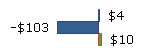
Highlights of FY2012 Budget Expenditures
Income Security & LaborUnemployment, social security, federal employee retirement and disability, job trainingHealthMedicare, Medicaid, CHIP, occupational and consumer health & safetyMilitaryNational defense, nuclear weapons, international securityNet Interest on the DebtAnnual interest owed on national debtFoodAgriculture and nutritional assistance, food stampsVeterans BenefitsHealth care, housing, education and income benefits for veteransTransportationAir, water and ground transportationEducationElementary, secondary, higher and vocational educationEnvironmentNatural resources, conservation, energy supply and use, scienceHousingHousing assistance and credit, community development, disaster assistanceInternational AffairsDiplomatic, development, and humanitarian activities abroadGovernmentJudicial, legislative and
executive branches,
postal service
Hat tip: @ShastaPoppies

Nijat finally understood. The anticoagulant. The expensive “execution meals” for the regiment following a trip to the killing ground. The plainclothes agents in the cells who persuaded the prisoners to sign statements donating their organs to the state. And now the medical director was confirming it all: Those statements were real. They just didn’t take account of the fact that the prisoners would still be alive when they were cut up.
“Nijat, we really are going to hell.”
The numbers suggest that the influence of pharmaceutical company marketing cannot be overlooked. Ninety-nine percent of youth receiving antipsychotic medications in the study were given atypical antipsychotics — the newer generation of these drugs, which are expensive and mostly unavailable in generic form and have been heavily advertised.
All of the major manufacturers of these drugs have been fined by the Food and Drug Administration for illegal marketing practices — in part, for marketing the drugs for unapproved use in children — with some convicted of criminal charges.
Eli Lilly, which manufactures the atypical antipsychotic Zyprexa, paid out $1.42 billion in 2009 — $615 million of that to settle criminal charges. The charges against Lilly involved selling Zyprexa to doctors for use in children, despite the fact that it was not approved for this age group.
Bristol Myers Squibb paid $515 million in 2007 to settle charges that it also illegally pushed its antipsychotic Abilify to child psychiatrists. Pfizer paid out $301 million in a similar case related to its drug Geodon. AstraZeneca paid out $520 million to settle charges over the drug Seroquel. In all of these cases, the drugs were sold for unapproved use in youth.
By MAIA SZALAVITZ
Facebook may take away the disputed page on Facebook from both Merck in Germany and Merck in the U.S., if the two companies do not come to an agreement, a person familiar with the situation said Monday.
The page Facebook.com/Merck was not accessible by late Monday, and the Merck U.S. page had moved to another location on the social network.
Germany's Merck KGaA threatened legal action after it said it lost its Facebook page apparently to rival Merck & Co. in the U.S.
Facebook on Monday apologized for what it described as an "administrative error".
Nov. 28 (Bloomberg) -- The U.S. Supreme Court agreed to consider whether drugmakers must pay overtime to as many as 90,000 sales representatives, as the justices heeded calls from both sides for review of what may be a multibillion-dollar case.
The high court today said it will review a lower court’s conclusion that salespeople working for a GlaxoSmithKline Plc unit aren’t covered by a federal wage-and-hour law.
The suit is one of more than a dozen similar cases that have been filed against drugmakers, including Johnson & Johnson, Bristol-Myers Squibb Co. and units of Novartis AG and Merck & Co. With federal appeals courts divided on the issue, business trade groups joined the Glaxo salespeople in urging review.
“Such suits could potentially lead to billions of dollars in unexpected liability,” the U.S. Chamber of Commerce said in a court filing. “Further, they could force the industry to abandon pay practices that have existed -- virtually unchallenged -- since before the Second World War.”
In the March 2010 referendum, 93% voted against repayment of the debt. The IMF immediately froze its loan. But the revolution (though not televised in the United States), would not be intimidated. With the support of a furious citizenry, the government launched civil and penal investigations into those responsible for the financial crisis. Interpol put out an international arrest warrant for the ex-president of Kaupthing, Sigurdur Einarsson, as the other bankers implicated in the crash fled the country.
Western pharmaceutical companies have seized on India over the past five years as a testing ground for drugs – making the most of a huge population and loose regulations which help dramatically cut research costs for lucrative products to be sold in the West. The relationship is so exploitative that some believe it represents a new colonialism.
Since restrictions on drug trials were relaxed in 2005, the industry in India has swollen to the point where today more than 150,000 people are involved in at least 1,600 clinical trials, conducted on behalf of British, American and European firms including AstraZeneca, Pfizer, and Merck. There may be more.
While there is no official figure, some estimates suggest the industry may be worth as much as £189m. Regulators have struggled to keep pace with the explosion. Between 2007 and 2010, at least 1,730 people died in India while, or after, participating in such trials. Many of those people, often only eligible for the studies because they were ill, might have died anyway. Yet when there are complications, even those resulting in deaths, there is often a failure properly to investigate.
Campaigners say the industry is wide open to other abuses. While there is no doubt many crucial trials are carried out according to the appropriate guidelines, activists say a lack of oversight has led to numerous situations where poor, sometimes illiterate individuals, recruited from city slums or else tribal communities, are used in the trials without giving proper informed consent – that is, without fully understanding what they are signing up for. Alongside this, a new industry providing participants for these studies has been spawned and is making considerable profits.
Among some of the incidents confirmed by aninvestigation carried out by The Independent in the states of Madhya Pradesh, Andhra Pradesh, as well as in Delhi and London, were:
* The recruitment of hundreds of tribal girls without parental consent for an immunisation study sponsored by the Bill and Melinda Gates Foundation on the nod of the warden of their government hostel. Several girls subsequently died. The study was halted by the federal authorities.
* The use by drug companies of survivors of the world's worst poisonous gas disaster in Bhopal as "guinea pigs" in at least 11 trials without proper informed consent.
* The completion by doctors at a government hospital in Indore, in central India, of dozens of private trials that a police investigation found "violated the ethical guidelines". The doctors who conducted the trials decided that not one of 81 cases in which a participant suffered an adverse effect was linked to the treatment. New trials were stopped while the state government investigated. A whistle-blower was fired.
India is just one of many developing countries used by leading Western pharmaceutical companies, which spent £40bn in 2010 on research and development. Globally, it is estimated around 120,000 trials are taking place in 178 countries.
Companies can reduce their research costs by an estimated 60 per cent by outsourcing the work. China, Indonesia and Thailand are among the countries which have also seen the incidence of trials soar in recent years. A quarter of all clinical data submitted to European drug regulators to secure market approval for a new drug has been obtained from trials in low- and middle-income countries. Confidential data from drug companies suggests this has recently increased to closer to 50 per cent.
Campaigners say India is a particularly attractive location for researchers not simply because of the lax regulations but because of the size and genetic diversity of the 1.2 billion population and becuase of the variety of conditions to treat. Added to this, almost all doctors speak some English. The infrastructure for such trials, often in the form of government hospitals, is widely available.
The loosening of regulations did away with a measure that had been put in place for the protection of trial subjects. Previously, for a phase three trial of a drug (when it is given to a larger sample of individuals) to be carried out in India, that phase of the trial had already to be have been completed elsewhere. Now they can run concurrently.
A comprehensive picture of the situation regarding drug trials in India following the 2005 amendment to the Drugs and Cosmetics Act is not available because of a lack of transparency and because various agencies are involved in the monitoring of the situation. Instead, much of the information has been gathered by unpaid activists using the country's Right to Information Act.
Much of the data has been collated by Dr Chandra Gulhati, a retired physician who edits the Indian Monthly Index of Medical Specialties, and who pulls together information from across the country on trials going back more than a decade. In his office in Delhi, Dr Gulhati described how lack of oversight and vested interests had created an environment in which many leading institutions had been involved in trials that breached national and international guidelines.
Dr Gulhati said figures released by the authorities suggested around 1,730 people had died following their participation in trials between January 2007 and December 2010. Whether all of these died directly as a result of the trial is unclear; many of those who participated may already have been severely ill and would have died anyway. He claimed there was an absence of clarity because it was left primarily to the doctors overseeing the trial, the ethics committee and the drug companies themselves to determine whether there was a link.
Earlier this year India's Health Minister, Ghulam Nabi Azad, told parliament that a total of 10 foreign drug companies had made payments to the relatives of 22 individuals who had died during or following trials in 2010. The payments came to an average of just 238,000 rupees, or £3,000, for each individual. "Indians are being used by companies to make money selling expensive medicines in the West," claimed Dr Gulhati. "[They are] using illiterate and poor Indians who will never be able to afford these kinds of medicines."
The companies who made the compensation payments were: Pfizer, PPD, Bristol-Myers Squibb, Amgen, Bayer, Eli Lilly, Quintiles, Merck KGaA, Sanofi-Aventis and Wyeth, which is now part of Pfizer. When contacted, most of the companies declined to provide details of the compensation, other than to say the figure had been agreed in conjunction with a supposedly independent ethics committee and the Drug Controller General of India.
A spokeswoman for Eli Lilly also explained that payments totalling £6,340 had been made to the relatives of three individuals who died while participating in a trial of Pemetrexed, an anti-cancer drug. All three were in the advanced stages of cancer. "The causes of death were from known drug-related side effects which were already listed in the package insert," said Dr Anurita Majumdar, a medical adviser to the company. "These events do not lead to death in all patients but can get compounded in certain patients who have poor general condition and nutritional status." Ms Majumdar added: "We were not advised by regulators to stop the trials."
Drug companies insist they always adhere to regulations. In a statement, the Association of the British Pharmaceutical Industry said: "In order for a pharmaceutical company to gain a licence in the UK for a newly developed medicine, the clinical trials, wherever they took place, are subject to a high level of scrutiny by the UK regulatory authorities. It would be of no benefit to companies to conduct clinical trials that were not of the required standard, as any medicine would not gain a licence and not be made available to patients."
While the Indian media has often focused on deaths that have resulted from trials, campaigners say perhaps a bigger issue is the routine exploitation of those who participate in them – individuals who are often poor, ill-educated and unable to read and write.
Many participants said in interviews that they agreed to take part simply because of the recommendation of their doctor, who was very often the person conducting the trials. Since many of those selected to take part are from some of the very poorest communities, individuals have little possibility of redress.
Dr Anand Rai, a former doctor-turned-whistle-blower in the city of Indore, said many of the people recruited for trials at the city's Maharaja Yeshwantrao hospital were from the tribal community.
"There are ethical violations at every level," said Ms N Sarojini, director of the Sama resource group for women, which recently held a forum on clinical trials. "There is a lack of accountability, a lack of monitoring and regulation."
International guidelines have been formulated to protect the rights of trial subjects. They stipulate that the interests of the individual should take precedence over the good of science. Every drug company has policies which conform to these standards. In reality, say activists, these are not adhered to.
The swelling controversy in India has reached the point where the country's parliament was recently told by Brinda Karat, an MP who has called for investigations into abuses: "There is a gross violation of guidelines and laws concerning clinical trials in our country."
Campaigners say the lack of regulation is underscored by the situation regarding ethics committees, from which every institution carrying out a trial must receive approval. Such is the laxity in the guidelines that almost anyone can be part of such a body.
Dr Amar Jesani, editor of the Indian Journal of Medical Ethics, said he was asked to join such a committee at a reputable teaching hospital where there were more than 50 trials registered as ongoing. "There was no organised information about the trials or subjects. When I started going through the protocols so that I could properly assess the study question, the other members said it was the first time they had ever read the protocols," he said.
Indian government officials claim the system includes checks and balances which are being continually improved. In an interview, Dr Vishwa Katoch, director general of the Indian Council of Medical Research, said: "In the last 15 years there has been a remarkable improvement in the functioning of the ethics committees."
Case study: Sarita Kudumula, 13 - Parents only knew Sarita had been in a study after she died
No one told the parents of 13-year-old Sarita Kudumula that the teenager was involved in a medical study. They first they knew of it was after she collapsed and died, some days after receiving the injection. Discovered on the floor of a relative's home, the young girl was rushed first to the local clinic and then to the nearest hospital. By the time they got her there, she was already dead.
The teenager had been part of a study carried out in a remote part of the southern Indian state of Andhra Pradesh (AP) to test the feasibility of vaccinating large numbers of young women against the Human Papiloma Virus (HPV), which is sexually transmitted and is one of the causes of cervical cancer. The trial, administered in conjunction with the state government, was led by a US-based NGO, Path, which received millions of dollars from the Bill and Melinda Gates Foundation. Samples of an anti-cancer vaccine, Gardasil, produced by US company Merck, were provided free of charge. Officials wished to know whether the vaccine could be introduced as part of a national immunisation programme. Up to 74,000 women in India reportedly die from the disease every year.
It seems unlikely that Sarita died as a result of her participation in the study. No one knows exactly what led to her death or those of six others involved in the study in AP and the western state of Gujarat, where another drug, Cervarix, produced by GlaxoSmithKline, was used instead of Gardasil. Both Path and Merck insist that Gardasil is safe. A post-mortem carried out after the girl's death suggested she had committed suicide – a conclusion her parents refuse to accept. A subsequent investigation by the federal government – which suspended the trial after the deaths sparked controversy – concluded it was unlikely the girls had died as a result of having been given the vaccine.
In a sense, though, the cause of Sarita's death is besides the point. What is beyond dispute is that Sarita's father and mother, Nageshwara and Venkatama, and the parents of hundreds of other tribal girls, were not informed their daughters were taking part in a trial – something that is in breach of guidelines laid down by the Medical Research Council of India, which demands that those participating in trials give "informed consent". Sarita's family are adivasis, tribal communities who are among the most vulnerable in India, and Sarita attended a government school and hostel, located a few miles from her home. Only tribal girls attend.
"Nobody came to ask us for permission," said Sarita's father, a farmer, sitting outside his thatched hut in the village of Anjipakka, as he remembered his daughter, who died in January 2010. "She enjoyed the hostel. She was a bright student and took part in all the social activities. She was intelligent. She wanted to become a doctor."
When The Independent visited the pink-painted Government Girls' Ashram and High School in the nearby town of Bhadrachalam, the hostel warden confirmed that health officials had come to the hostel and outlined their plan to vaccinate 300 girls. He said that because it was a government project, he had been told he could authorise the trials without parental permission. "We did not show any forms or ask for the signatures of the girls or the parents," he said. The warden claimed the vaccination programme went off without a hitch.
While the government inquiry did not link the vaccine to the death of the girls or suggest there had been a "major violation of ethical norms", members of the enquiry panel were concerned that tribal girls had participated in the study without consent. "The most significant deficiency in the implementation of the trial was the obtaining of consent," said one finding.
Officials at Path's India office say the study was carried out after the vaccine was already licensed and was not strictly a clinical trial. "Among over 23,000 girls vaccinated [in AP and Gujarat] through the project, seven girls passed away, but the deaths occurred weeks or months following vaccination," said Tarun Vij, Path's country head. Regarding consent, he said: "The state government authorised the wardens to provide this consent for girls who were living at residential schools."
Spokesmen for the Gates foundation, Merck and GlaxoSmithKline all emphasised that the drugs involved in the studies are safe. A GlaxoSmithKline spokesman added that the trials were carried out according to the same standards wherever they were conducted in the world. On the issue of consent, Gates foundation spokesman Chris William said: "The implementing partner on the ground (the state of AP) made the decision to empower headmasters to provide consent for this licensed vaccine in some special circumstances. We haven't seen anything that would suggest that the decision should be second-guessed."
Nearly half (48 percent) of the 100,000 hospitalizations occurred among adults 80 and up, according to the study, published in the Nov. 24 issue of the New England Journal of Medicine. Nearly two-thirds (66 percent) were the result of unintentional overdoses.
The four medications, used alone or together, most often cited:
The blood thinning medication warfarin (Coumadin, Jantoven), which is used to treat blood clots, was involved in 33 percent of emergency hospitalizations.
Insulin, used to control blood sugar in diabetes patients, was involved in 14 percent of cases.
Antiplatelet drugs such as aspirin and clopidogrel (Plavix), which are used to prevent blood clots, were involved in 13 percent of cases.
Oral hypoglycemic agents -- diabetes medications taken by mouth -- were involved in 11 percent of cases.
With antiplatelet or blood thinning drugs, bleeding was the main problem. For insulin and other diabetes medications, about two-thirds of cases involved changes in mental status such as confusion, loss of consciousness or seizures.
US Outlook: Merck KGaA, a German pharmaceuticals company, is spitting chips because Merck & Co, its bigger US namesake and rival, has somehow managed to take over the facebook.com/merck page that it signed up for last year.
It doesn't know how control of the page was switched over, and it is getting ready to sue – either Merck & Co for theft or Facebook for breach of contract.
The case will be important and illuminating but, for now, the most notable feature of the court papers is their insight into Facebook customer service.
"On or about October 21, I received an email from an individual identifying herself as Marissa, User Operations, Facebook," Merck KGaA's lawyer Robert Horowitz says, describing the progress of his complaint. "After an exchange of several emails, it became clear to me that Marissa either did not understand the problem faced by Merck or was intentionally giving unresponsive answers to my inquiries. I sent her an email politely asking for a telephone number I could call to discuss the matter more fulsomely. I did not receive a response."
After more prodding, Marissa eventually writes to say that Facebook is "looking into the matter" but it takes several more emails and several more days before "Xavier, User Operations, Facebook" writes with another unhelpful message.
"Xavier wrote back on 14 November stating that 'we do not offer functionality or technical support from this email alias', and again displaying either an incomplete knowledge of the problem or evasiveness. I asked again for a telephone number in order to better explain the issue, to which Xavier incredibly replied that 'no one is available for a call at this time'."
Mr Horowitz emailed "Xavier" a final time on 15 November, coming up to four weeks from the start of the correspondence, and has received no further reply.
When a lawyer writes the word "incredibly", you know he has just torn the last of his hair out. It makes holding for a call centre operative sound positively appealing.
Nov 24 (Reuters) - The conflict between Novartis and German wholesale drug sellers about delivery conditions is widening, with two more wholesalers saying on Thursday the Swiss company has stopped supplying them with pharmaceuticals products.
Phoenix , the market leader in pharmaceutical wholesale in Germany, and rival Sanacorp said they have stopped receiving deliveries in Germany from Novartis this month.
Gehe Pharma Handel, a unit of Celesio AG , said on Nov. 9 the two companies have been negotiating about delivery conditions for some time and that Novartis wanted to change the conditions unilaterally.
Phoenix, a supplier to 10,000 pharmacies, said on Thursday it has stopped receiving deliveries in Germany from Novartis since mid-November.
From 2009 to early 2011, at least 25,000 Texas physicians and researchers received a combined $57 million — and probably far more — in cash payments, research money, free meals, travel and other perks, according to data culled from 12 drug companies and provided by the nonprofit investigative news organization ProPublica.
Dozens of these medical professionals were paid more than $100,000 each during that period. And 114 were professors, physicians, psychiatrists or researchers who were already paid a salary by the state — in some cases more than a half-million dollars a year. These state employees brought in nearly $3 million combined from pharmaceutical companies from 2009 to early 2011, according to a Texas Tribune analysis of the ProPublica data.
(Reuters) - Merck & Co will pay roughly $950 million to settle criminal and civil charges that it promoted the painkiller Vioxx for an unapproved use, the Justice Department said on Tuesday.
The settlement is the latest in a broader U.S. clampdown over pharmaceutical industry practices that may have put commercial goals above the interests of payers and patients, such as illegally marketing drugs.
Below is a list of companies that have reached big-ticket settlements or set aside money to cover a deal with authorities:
GlaxoSmithKline Plc -- $3 billion
Earlier this month, Britain's biggest drugmaker settled disputes with the U.S. government over the way it marketed and developed drugs, including an investigation into the company's controversial diabetes drug Avandia, which has been linked to heart risks.
The settlement cost was equal to about 2.8 percent of the company's market value.
Pfizer Inc -- $2.3 billion
The world's biggest drugmaker in 2009 reached a settlement for pitching its now-withdrawn Bextra pain drug and a dozen more medicines to patients and doctors for unapproved uses, after the U.S. government deemed the company a repeat offender for illegal marketing.
The company also agreed to plead guilty to a U.S. criminal charge related to its promotion of Bextra.
Eli Lilly and Co -- $1.42 billion
The pharmaceutical company settled criminal and civil charges in 2009 for off-label promotion of its antipsychotic drug Zyprexa for use in children and elderly patients.
Zyprexa, a $4.5 billion a year schizophrenia treatment and the company's best-selling product, began facing generic competition in the United States last month.
Abbott Laboratories -- $1.4 billion
The drugmaker took the charge in October as it attempts to settle a U.S. federal investigation into marketing of its Depakote epilepsy drug.
Federal officials are probing whether Abbott's marketing of the drug violated civil or criminal laws. The drug had been one of the company's biggest-selling products until it began facing generic competition in the third quarter of 2009.
(Compiled by Anna Yukhananov in Washington; editing by Phil Berlowitz)
This past weekend I participated in a four-hour meeting of Occupy Wall Street activists whose job it is to come up with the vision and goals of the movement. It was attended by 40+ people and the discussion was both inspiring and invigorating. Here is what we ended up proposing as the movement's "vision statement" to the General Assembly of Occupy Wall Street:
We Envision: [1] a truly free, democratic, and just society; [2] where we, the people, come together and solve our problems by consensus; [3] where people are encouraged to take personal and collective responsibility and participate in decision making; [4] where we learn to live in harmony and embrace principles of toleration and respect for diversity and the differing views of others; [5] where we secure the civil and human rights of all from violation by tyrannical forces and unjust governments; [6] where political and economic institutions work to benefit all, not just the privileged few; [7] where we provide full and free education to everyone, not merely to get jobs but to grow and flourish as human beings; [8] where we value human needs over monetary gain, to ensure decent standards of living without which effective democracy is impossible; [9] where we work together to protect the global environment to ensure that future generations will have safe and clean air, water and food supplies, and will be able to enjoy the beauty and bounty of nature that past generations have enjoyed.
The next step will be to develop a specific list of goals and demands. As one of the millions of people who are participating in the Occupy Wall Street movement, I would like to respectfully offer my suggestions of what we can all get behind now to wrestle the control of our country out of the hands of the 1% and place it squarely with the 99% majority.
Here is what I will propose to the General Assembly of Occupy Wall Street:
10 Things We Want
A Proposal for Occupy Wall Street
Submitted by Michael Moore1. Eradicate the Bush tax cuts for the rich and institute new taxes on the wealthiest Americans and on corporations, including a tax on all trading on Wall Street (where they currently pay 0%).
2. Assess a penalty tax on any corporation that moves American jobs to other countries when that company is already making profits in America. Our jobs are the most important national treasure and they cannot be removed from the country simply because someone wants to make more money.
3. Require that all Americans pay the same Social Security tax on all of their earnings (normally, the middle class pays about 6% of their income to Social Security; someone making $1 million a year pays about 0.6% (or 90% less than the average person). This law would simply make the rich pay what everyone else pays.
4. Reinstate the Glass-Steagall Act, placing serious regulations on how business is conducted by Wall Street and the banks.
5. Investigate the Crash of 2008, and bring to justice those who committed any crimes.
6. Reorder our nation's spending priorities (including the ending of all foreign wars and their cost of over $2 billion a week). This will re-open libraries, reinstate band and art and civics classes in our schools, fix our roads and bridges and infrastructure, wire the entire country for 21st century internet, and support scientific research that improves our lives.
7. Join the rest of the free world and create a single-payer, free and universal health care system that covers all Americans all of the time.
8. Immediately reduce carbon emissions that are destroying the planet and discover ways to live without the oil that will be depleted and gone by the end of this century.
9. Require corporations with more than 10,000 employees to restructure their board of directors so that 50% of its members are elected by the company’s workers. We can never have a real democracy as long as most people have no say in what happens at the place they spend most of their time: their job. (For any U.S. businesspeople freaking out at this idea because you think workers can't run a successful company: Germany has a law like this and it has helped to make Germany the world’s leading manufacturing exporter.)
10. We, the people, must pass three constitutional amendments that will go a long way toward fixing the core problems we now have. These include:
a) A constitutional amendment that fixes our broken electoral system by 1) completely removing campaign contributions from the political process; 2) requiring all elections to be publicly financed; 3) moving election day to the weekend to increase voter turnout; 4) making all Americans registered voters at the moment of their birth; 5) banning computerized voting and requiring that all elections take place on paper ballots.
b) A constitutional amendment declaring that corporations are not people and do not have the constitutional rights of citizens. This amendment should also state that the interests of the general public and society must always come before the interests of corporations.
c) A constitutional amendment that will act as a "second bill of rights" as proposed by President Franklin D. Roosevelt: that every American has a human right to employment, to health care, to a free and full education, to breathe clean air, drink clean water and eat safe food, and to be cared for with dignity and respect in their old age.
Let me know what you think. Occupy Wall Street enjoys the support of millions. It is a movement that cannot be stopped. Become part of it by sharing your thoughts with me or online (at OccupyWallSt.org). Get involved in (or start!) your own local Occupy movement. Make some noise. You don't have to pitch a tent in lower Manhattan to be an Occupier. You are one just by saying you are. This movement has no singular leader or spokesperson; every participant is a leader in their neighborhood, their school, their place of work. Each of you is a spokesperson to those whom you encounter. There are no dues to pay, no permission to seek in order to create an action.
We are but ten weeks old, yet we have already changed the national conversation. This is our moment, the one we've been hoping for, waiting for. If it's going to happen it has to happen now. Don't sit this one out. This is the real deal. This is it.
Have a happy Thanksgiving!
WASHINGTON – American pharmaceutical company Merck, Sharp & Dohme has agreed to pay $950 million to resolve criminal charges and civil claims related to its promotion and marketing of the painkiller Vioxx® (rofecoxib), the Justice Department announced today. Under the terms of the resolution, Merck will plead guilty to a one-count information charging a single violation of the Food Drug and Cosmetic Act (FDCA) for introducing a misbranded drug, Vioxx®, into interstate commerce. Under the terms of its plea agreement with the United States, Merck will plead guilty to a misdemeanor for its illegal promotional activity and will pay a $321,636,000 criminal fine.
Merck is also entering into a civil settlement agreement under which it will pay $628,364,000 to resolve additional allegations regarding off-label marketing of Vioxx® and false statements about the drug’s cardiovascular safety. Of the total civil settlement, $426,389,000 will be recovered by the United States, and the remaining share of $201,975,000 will be distributed to the participating Medicaid states. The settlement and plea conclude a long-running investigation of Merck’s promotion of Vioxx®, which was withdrawn from the marketplace in September 2004.
Merck’s criminal plea relates to misbranding of Vioxx® by promoting the drug for treating rheumatoid arthritis, before that use was approved by the Food and Drug Administration (FDA). Under the provisions of the FDCA, a company is required to specify the intended uses of a product in its new drug application to FDA. Once approved, the drug may not be marketed or promoted for so-called “off-label” uses – any use not specified in an application and approved by FDA – unless the company applies to the FDA for approval of the additional use. The FDA approved Vioxx® for three indications in May 1999, but did not approve its use against rheumatoid arthritis until April 2002. In the interim, for nearly three years, Merck promoted Vioxx® for rheumatoid arthritis, conduct for which it was admonished in an FDA warning letter issued in September 2001.
The parallel civil settlement covers a broader range of allegedly illegal conduct by Merck. The settlement resolves allegations that Merck representatives made inaccurate, unsupported, or misleading statements about Vioxx’s cardiovascular safety in order to increase sales of the drug, resulting in payments by the federal government. It also resolves allegations that Merck made false statements to state Medicaid agencies about the cardiovascular safety of Vioxx, and that those agencies relied on Merck’s false claims in making payment decisions about the drug. Finally, like the criminal plea, the civil settlement also recovers damages for allegedly false claims caused by Merck’s unlawful promotion of Vioxx for rheumatoid arthritis.
“When a pharmaceutical company ignores FDA rules aimed at keeping our medicines safe and effective, that company undermines the ability of health care providers to make the best medical decisions on behalf of their patients,” said Tony West, Assistant Attorney General for the Civil Division of the Department of Justice. “As this plea agreement and civil settlement make clear, we will not hesitate to pursue those who skirt the proper drug approval process and make misleading statements about the safety and efficacy of their products.”
“Today’s resolution appropriately reflects the severity of Merck’s conduct; it is yet another reminder that the United States will not tolerate misconduct by drug companies that bends the rules and puts patient safety at risk,” announced Carmen M. Ortiz, U.S. Attorney for the District of Massachusetts. “Any marketing activity that ignores the importance of FDA approval, or that makes unsupported safety claims about a drug is unacceptable, and will be pursued vigorously in both the criminal and civil arena.”
As part of the settlement, Merck has also agreed to enter into an expansive corporate
integrity agreement with the Office of Inspector General of the Department of Health and
Human Services (HHS-OIG), which will strengthen the system of reviews and oversight procedures imposed on the company. Although Vioxx is no longer on the market, this ongoing monitoring of Merck’s conduct is aimed to deter and detect similar conduct in the future.
“We will continue to work with our law enforcement partners to aggressively investigate and prosecute pharmaceutical companies – no matter how large – when they improperly market their products,” said Daniel R. Levinson, Inspector General of the United States Department of Health and Human Services. “Merck’s comprehensive corporate integrity agreement requires top company officials to complete annual compliance certifications, and obligates Merck to post information about physician payments on its website.”
This case was handled by the Justice Department’s Civil Division and the U.S. Attorney’s Office for the District of Massachusetts. The investigation was conducted by HHS-OIG, the FBI, the Office of Criminal Investigations for the FDA, the Veterans Administration’s Office of Criminal Investigations, the Office of the Inspector General for the Office of Personnel Management, the National Association of Medicaid Fraud Control Units, and the offices of various state attorneys general.
Drug giant Merck & Co. has agreed to plead guilty and pay $950 million to settle criminal and civil charges over the marketing of the arthritis painkiller Vioxx, which studies showed increased the risk of strokes and heart attacks, the U.S. Justice Department has announced.
Merck, based in New Jersey, pulled Vioxx from the market in September 2004.
The company pleaded guilty to a single misdemeanor charge of violating the Food Drug and Cosmetic Act for introducing a misbranded drug and will pay $321.6 million.
Merck will also pay $628.3 million to settle civil charges for off-label marketing of the drug and making false statements about its cardiovascular safety. The federal government will get $426.3 million and $201.9 million will be distributed to 43 states for Medicaid.
Read the full news release.
"When a pharmaceutical company ignores FDA rules aimed at keeping our medicines safe and effective, that company undermines the ability of health care providers to make the best medical decisions on behalf of their patients," said Tony West, Assistant Attorney General for the Civil Division . "As this plea agreement and civil settlement make clear, we will not hesitate to pursue those who skirt the proper drug approval process and make misleading statements about the safety and efficacy of their products."
In its statement, Merck emphasized the civil settlement first, noting that it "does not constitute any admission by Merck of any liability or wrongdoing."
"We believe that Merck acted responsibly and in good faith in connection with the conduct at issue in these civil settlement agreements, including activities concerning the safety profile of Vioxx," said Bruce N. Kuhlik, the company's executive vice president and general counsel. He did not comment on the criminal charge.
Merck's release also notes that "the United States acknowledged that there was no basis for a finding of high-level management participation in the violation."
Three former executives of medical-device manufacturer Synthes Inc. were sentenced to prison Monday. A fourth might have been if his attorney hadn't collapsed while standing at a lectern moments after saying that Synthes' unindicted board chairman was the ultimate authority and responsible for the illegal, sometimes fatal, bone-cement trial at the center of the proceedings.
Michael Huggins, 54, of West Chester, the former president of Synthes USA, was sentenced to nine months in prison and taken into custody immediately. Thomas Higgins, 55, of Berwyn, former leader of Synthes' spine division, got the same sentence. John Walsh, 48, of Coatesville, who was in charge of regulatory affairs, got five months.
U.S. District Judge Legrome D. Davis gave Higgins two weeks to report to prison so he could arrange for extra medical care for his wife. Davis gave Walsh until next Monday to report because Tuesday is his young daughter's birthday.
The three will pay $100,000 each in fines and be on supervised release after prison. All pleaded guilty to a single misdemeanor count under the responsible-corporate-officer doctrine.
Richard Bohner, 56, of Malvern, former vice president for operations, was the third of four defendants on Davis' docket Monday and might have gotten a sentence similar to those received by Huggins and Higgins.
But as one of his attorneys, Brent Gurney, was making the case for why Bohner should get only probation, Gurney collapsed and hit his head on a nearby table. He was given medical attention, including a bandage, because he was bleeding from the back of his head. Within a few minutes, Gurney was moving his hands, and he was conscious as paramedics wheeled him from the sixth-floor courtroom at the federal courthouse and off to Thomas Jefferson University Hospital.
Davis continued Bohner's case, and his sentencing will be rescheduled.
Synthes is a Swiss-based company with facilities and U.S. headquarters in West Chester. It is being acquired by health-care giant Johnson & Johnson for $21.3 billion.
Five of the world’s top-selling dozen medicines are produced in Ireland, and their sales will fall 52 percent to $13 billion by 2013 from $27 billion in 2010 as their patents expire, according to data compiled by Bloomberg based on analysts’ estimates. They start with Pfizer Inc. (PFE)’s cholesterol treatment Lipitor, which loses its patent protection this month.
In a survey sent to 50 emergency hospitals across Sweden by Sveriges Radio (SR) investigative news programme Kaliber, only four of the 40 that answered were aware of how common the problem was among their patients."The absolutely first thing that needs to be done is to raise awareness about drug-related problems. It's imperative that both doctors, staff and politicians in the health care sector understand the size of this problem," said Jessica Fryckstedt, chief physician at Karolinska University Hospital (Karolinska sjukhuset) in Stockholm, to SR.
Frykstedt has studied hospital admissions caused by pharmaceuticals.
"That just goes to show that we don't know about it, that we aren't going to discover it, and that these pharmaceutical problems are going to be allowed to continue, and the patient will pay for it with suffering, hospital time, and incorrect medication," she said.
Sweden's National Board of Health and Welfare (Socialstyrelsen) is currently working on new, stricter guidelines governing the prescribing of medications to elderly patients.
"We've looked at when a patient comes to the hospital and discovered that on the list of medications written in hospital charts there were almost two mistakes per patient, on average," Lydia Holmdal, a geriatric care specialist at Lund University Hospital.
So that’s how it got started.
The government’s sprawling foreign bribery sweep into the pharmaceutical industry was built, in a large part, on information Pfizer Inc. and Johnson & Johnson provided about their competitors, according to a story in the Wall Street Journal Monday.
Not surprisingly, ratting on your competitors has its rewards.
NEW YORK — US biotech firm Gilead Sciences announced plans Monday to acquire rival Pharmasset, a group specializing in treatments for AIDS and hepatitis, for $11 billion.
The cash deal at $137 per share "represents an important and exciting opportunity to accelerate Gilead's effort to change the treatment paradigm for HCV (hepatitis C virus) infected patients by developing all-oral regimens for the treatment of the disease regardless of viral genotype," California-based Gilead's chief executive John Martin said.
Pharmasset currently has three clinical-stage product candidates for the treatment of chronic hepatitis C virus in trials and is hoping for regulatory approval for some of the drugs soon.
"This transaction will serve to drive the long-term growth of our business, and we look forward to working closely with the Pharmasset team to advance a broad clinical program in HCV to address the unmet needs of patients and the medical community." Martin said.
Nov. 21 (Bloomberg) -- Units of Bayer AG, Germany’s largest drugmaker, may have sought to market the Yasmin family of birth- control pills for unapproved uses and mislead women about the health risks the drug posed, according to company e-mails.
Bayer unit officials discussed promoting the contraceptive known as Yaz, a spinoff of Yasmin, for treatment of all types of premenstrual syndrome, according to company files provided to lawyers for women suing Bayer. U.S. regulators approved Yaz only for the most severe form of PMS. Salespeople for Bayer unit Berlex Laboratories Inc., acquired in the 2006 purchase of Schering AG, received an e-mail that year from a company official citing a Woman’s Day magazine article about Yaz.
“This article is a nice way of using YAZ for PMS treatment instead of just focusing on the specific” class of women battling premenstrual dysphoric disorder, the most severe form of PMS, wrote Matt Sample, a Berlex sales consultant, according to a copy of the e-mail.
Workers at Novartis' Nyon facility in Switzerland carried out a strike to protest the closure of the plant, but called it off after one day when the company agreed to look at alternatives that might save jobs.
A total of 320 jobs could go if the Nyon over-the-counter (OTC) drugs facility shuts down, with another 760 Swiss jobs due to go at another chemical plant in Basel. All told, the company expects to slash its workforce by around 2,000 in Western markets, offset by the creation of around 700 positions in Asia.
The trade union representing many of the threatened Swiss workers - Unia - maintains that 2,000 jobs will be lost if Nyon closes, because so many local businesses rely on the wages generated by staff at the drugmaker. The group has warned that additional strike action may be taken in future.
By CHRISTOPHER MATTHEWS And JOE PALAZZOLO
Pfizer Inc. will pay more than $60 million to resolve U.S. government probes into whether the drug maker paid bribes to win business overseas, people familiar with the matter said.
The settlements, expected to be made public by year-end, come as part of a government investigation that has changed how the pharmaceutical industry conducts business overseas in light of U.S. antibribery laws.
Pfizer and rival Johnson & Johnson, which settled a bribery probe earlier this year, provided U.S. authorities with information about industry practices that could violate the Foreign Corrupt Practices Act, according to court documents and people familiar with the investigations.
The FCPA, enacted in 1977, bars companies from paying bribes to foreign officials to obtain business. According to the Justice Department and the Securities and Exchange Commission, which jointly enforce the FCPA, that includes doctors and other employees of government-run overseas hospitals. As a result, the agencies consider some industry practices, such as paying a doctor to encourage the physician to buy a medicine, in violation of the act if the doctor works for a foreign state-owned institution.
Related Video
Dow Jones Newswires reporter Peter Loftus has details of Pfizer's decision to aggressively market branded cholesterol-lowering drug Lipitor after the patent expires at the end of November. AP Photo/Mel Evans, File
Pfizer's and Johnson & Johnson's cooperation contributed to a government investigation that has affected several major drug companies, including Merck & Co., AstraZeneca PLC, Bristol-Myers Squibb Co. and GlaxoSmithKline PLC, according to the people familiar with the investigations. The four companies last year said in regulatory filings that they received letters of inquiry from the Justice Department and the SEC. The companies have said they are cooperating with investigators.
Spurred by the investigations, companies throughout the industry are developing multimillion-dollar compliance programs and are spending more time trying to identify foreign doctors and health-care workers that could qualify as foreign officials, said Jay Perlman, director of global investigations and compliance at Navigant Consulting Inc. "We're seeing a real sea change in the attitude," he said.
Pfizer, which is based in New York, said in a Nov. 10 regulatory filing that it had reached agreements in principle with the SEC and the Justice Department in connection with "potentially improper payments" made by units of Pfizer and Wyeth, which Pfizer acquired in 2009 for $68 billion. Two of the people familiar with the negotiations said they are continuing, so the terms could change before the final settlement is reached. It isn't clear if Pfizer or Wyeth will admit to wrongdoing.
Representatives of Pfizer and Johnson & Johnson declined to comment.
Johnson & Johnson in April agreed to pay $70 million to settle allegations that subsidiaries paid bribes to Greek doctors who chose the company's surgical implants and to doctors in Poland and Romania in exchange for contracts and agreements to prescribe the company's drugs. In a deferred prosecution agreement with the Justice Department, Johnson & Johnson admitted to violations of the antibribery law and will avoid prosecution if it satisfies the government that the company has made changes to prevent future misconduct.
In a settlement with the SEC, Johnson & Johnson neither admitted nor denied civil accusations.
The Justice Department said in settlement documents that Johnson & Johnson received a $17 million discount on its $21.4 million criminal fine for "substantial assistance in the prosecution of others."
Pfizer disclosed in 2004 that it had voluntarily contacted the Justice Department and the SEC about an internal investigation into "potentially improper payments" in Croatia.
After acquiring Pharmacia Corp. in 2003, Pfizer uncovered potential corruption in the company's operations in Eastern Europe, one of the people familiar with the matter said. More evidence of improper payments surfaced after Pfizer's acquisition of Wyeth about six years later, the person said.
"It was through the lens of Pfizer and Johnson & Johnson that the industrywide probe got going," the person said.
Lawyers who represent companies in foreign-bribery investigations said the government investigations transformed anticorruption compliance."Companies are investing more in compliance. And they realize it's an investment," said Peter Spivack, a partner at law firm Hogan Lovells US LLP who represents companies in foreign bribery investigations. "They are realizing they need programs that work overseas as well as they work in the U.S."
With the Johnson & Johnson case, the government created incentives for companies to come forward, not only to cooperate in investigations but also to inform on competitors, Mr. Spivack said.
Some companies, such as AstraZeneca, have barred payments to doctors to attend international scientific and medical congresses. Giving gifts in most cases has been restricted to educational items.
AstraZeneca Chief Executive David Brennan, who announced the policy at an industry conference in Istanbul in May, said the company could no longer afford ambiguity.
"I know that this is not easy," he said. "But we have made it clear that our sales force have to say, 'No.' They must do the right thing, not the easy thing."
President Ruth J. Simmons
Office of the President
Brown University
…Dear President Simmons,
We write to you about our ongoing concerns regarding a journal article that originated at the Department of Psychiatry and Human Behavior, under the leadership of Dr. Martin Keller.
Between 1993 and 1998, SmithKline Beecham [subsequently GlaxoSmithKline] provided $800,000 to Brown University for its participation in the above study. The results were published in 2001 by Keller et al. in a journal article, ‘Efficacy of paroxetine in the treatment of adolescent major depression: a randomized, controlled trial’, in the Journal of the American Academy of Child & Adolescent Psychiatry. The article was ghostwritten by agents of the manufacturer, and seriously misrepresented both the effectiveness and the safety of paroxetine in treating adolescent depression.
While problems with study 329 and the Keller et al paper have been thoroughly exposed in legal actions, the bioethical and medical literature, a book, and a BBC Panorama documentary, the paper continues to be cited uncritically in the medical literature as evidence of the efficacy of paroxetine for treatment of adolescent depression. Our main concern is that adolescents are being harmed because well-intentioned physicians have been misled.
Moreover, the misrepresentation has been compounded by the following:
[1] The Journal was asked by two of the undersigned, Drs. Jureidini and McHenry, to retract the article, but has refused to do so.
[2] In a letter of May 13, 2008, from Pamela D. Ring to Dr. David Egilman, Brown University refused to release information about its internal investigation into Dr. Keller’s conflicts of interest and scientific misconduct.Study 329 reveals the pervasive influence of GlaxoSmithKline’s marketing objectives on the preparation and publication of a ‘scientific’ manuscript and peer-reviewed journal article. GlaxoSmithKline’s own internal documents disclosed in litigation show that company staff were aware that the study 329 did not support a claim of efficacy but decided that it would be "unacceptable commercially" to reveal that.
The data were therefore selectively reported in Keller et al.’s article, in order to "effectively manage the dissemination of these data in order to minimise any potential negative commercial impact". As it turns out, the Keller et al. article was used by GlaxoSmithKline’s to ward off potential damage to the profile of paroxetine and it was used to promote off-label prescriptions of Paxil® and Seroxat® to children and adolescents, some of whom became suicidal and self-harmed as a result.
The unretracted article is a stain on Brown University’s reputation for academic excellence. The University cannot claim to be a leader in scientific research and moral integrity while failing to act to redress this article that negligently misrepresents scientific findings. In its accreditation document for the New England Association of Schools and Colleges (NEASC), Brown University claims in relation to ‘Standard Eleven: Integrity’ that ‘The institution manages its academic, research and service programs, administrative operations, responsibilities for students and interactions with prospective students with honesty and integrity’, that it ‘expects that members of its community, including the board, administration, faculty, staff, and students, will act responsibly and with integrity’, and that ‘Truthfulness, clarity, and fairness characterize the institution’s relations with all internal and external constituencies’. The University’s inaction in relation to study 329 casts doubt on the validity of these claims.
We ask that you write to the editor, Dr. Andrés Martin, Journal of the American Academy of Child & Adolescent Psychiatry supporting our request for retraction of the journal article. We are making this letter available to interested parties and it will be posted on the Healthy Skepticism website [www.healthyskepticism.org].
The cost of developing new medicines has shot up while the number of drugs in late-stage development has declined further, underlining the challenges faced by the major pharmaceutical companies.
A report by Deloitte on the world's 12 largest drugmakers shows that the average cost of bringing a product to market rose by more than 25% to more than $1bn (£630m) this year, from $830m in 2010. The number of late-stage drugs in development dropped to 18 from 23, on average, per company. Ten of the 12 firms have seen a decline in returns from research and development (R&D), resulting in an overall drop to 8.4% from 11.8% last year.
This month, a new antidepressant drug by AstraZeneca – seen as the most likely successor to Seroquel, the firm's second-biggest selling drug – failed its first late-stage trial. GlaxoSmithKline suffered a setback in March when an experimental type-1 diabetics drug failed a late-stage clinical trial, following the failure of a similar medicine from its US rival Eli Lilly last year.
GSK's chief executive, Andrew Witty, said recently that the high cost of drug discovery was "unacceptable" and urged the industry "to fail less often".
Julian Remnant, head of Deloitte's European R&D advisory practice, said: "While this picture reflects a snapshot of the very real productivity challenges the industry is facing, it belies some underlying successes. Of the 12 companies we analyse each year – the top 12 research-based pharmaceutical companies globally – nearly two-thirds succeeded in realising more value from product commercialisation than has been lost from late-stage product failures.
"Also, across the 12 companies, non-R&D costs have declined, resulting in a higher operating margin – which helps to free up cash flow that could be reinvested in R&D," he said.
But some companies, such as Pfizer, the world's largest drugmaker, have decided to plough less money into R&D and buy in more drugs from biotech firms and universities. Last year spending on R&D by the industry fell for the first time.
Remnant called for more collaboration between companies. "The walls of secrecy are coming down in some cases and there are increasing numbers of players within the industry forming alliances and joint ventures to pool research knowledge, in particular disease area or indication.
"Having said this, the pharmaceutical R&D sector can do more to work together, for example, sharing knowledge on the science behind failed molecules and studies will help improve success rates, and ultimately bring down the cost to develop new medicines."
Remnant also believes companies will come together to simplify and share non-competitive areas of the R&D operation to reduce cost.
Some drugmakers have also spent millions on settlements. Last week, the Sandoz division of Swiss group Novartis agreed to pay $150m to settle lawsuits filed by Florida, California and a whistleblower, to settle pricing fraud charges. GSK recently agreed to pay $3bn to settle investigations by American authorities into the sale and marketing of drugs such as Avandia and Wellbutrin.
By Julia Kollewe