Nektar Therapeutics issued a statement in response to Pfizer's announcement this morning to exit Exubera, the inhaled insulin product to treat diabetes.
"We first learned this morning of Pfizer's decision to walk away from Exubera from their press release," said Howard W. Robin, President and Chief Executive Officer of Nektar Therapeutics.
"Nektar has been very disappointed in Pfizer's performance in marketing Exubera. Pfizer has publicly acknowledged its organizational difficulties and resulting poor performance in launching Exubera.
This has culminated in their announcement today.
We are evaluating all of our options with respect to Pfizer's Exubera announcement to protect the interests of Nektar. We continue to believe Exubera is an important advancement for diabetic patients."
Showing posts sorted by relevance for query Exubera. Sort by date Show all posts
Showing posts sorted by relevance for query Exubera. Sort by date Show all posts
Friday, October 19, 2007


Wednesday, November 14, 2007
Pfizer kiss off the Nektarenes
Pfizer and co-development partner Nektar Therapeutics seem to have kissed and made up after a recent falling-out over the drugs giant’s decision last month to stop marketing the diabetes treatment Exubera.
The firms have announced that Nektar will get a $135 million one-time payment which will leave “resolved all outstanding contractual issues in connection with Exubera (inhaled insulin).” The settlement also covers Nektar’s follow-up inhaled insulin product, referred to as NGI, which is currently in Phase I.
This act of reconciliation comes after Pfizer finally gave up on Exubera, having acquired co-marketing rights to the drug from partner Sanofi-Aventis for $1.3 billion in January 2006. It was launched in the middle of last year but failed to make any sort of mark.
Chief executive Jeff Kindler said at the time that “despite our best efforts, Exubera has failed to gain the acceptance of patients and physicians [so] we have therefore concluded that further investment in this product is unwarranted.” However it appeared that Pfizer had forgotten to tell Nektar and the latter’s non-plussed chief Howard Robin was non-plussed, saying that “we first learned…of Pfizer's decision to walk away from Exubera from their press release".
He added that his company “has been very disappointed in Pfizer's performance in marketing Exubera” and his criticism of the latter firm brought some unwelcome press attention which suggested that the New York-based behemoth may not be a great partner for smaller companies.
Everything seems sorted now, however, and an agreement has been signed. If a new partner is selected, Pfizer will transfer its remaining rights and “all economic benefits”, including regulatory filings, for Exubera and NGI. Pfizer will continue to supply the product for at least three months after a deal with the new partner has been signed.
Mr Kindler and Mr Robin also issued a joint statement saying that the agreement “strengthens our relationship and demonstrates our ability to work together to craft a solution”. They added that the firms “look forward to advancing our joint development of PEGylated human growth hormone therapy”.
Source: PharmaTimes
The firms have announced that Nektar will get a $135 million one-time payment which will leave “resolved all outstanding contractual issues in connection with Exubera (inhaled insulin).” The settlement also covers Nektar’s follow-up inhaled insulin product, referred to as NGI, which is currently in Phase I.
This act of reconciliation comes after Pfizer finally gave up on Exubera, having acquired co-marketing rights to the drug from partner Sanofi-Aventis for $1.3 billion in January 2006. It was launched in the middle of last year but failed to make any sort of mark.
Chief executive Jeff Kindler said at the time that “despite our best efforts, Exubera has failed to gain the acceptance of patients and physicians [so] we have therefore concluded that further investment in this product is unwarranted.” However it appeared that Pfizer had forgotten to tell Nektar and the latter’s non-plussed chief Howard Robin was non-plussed, saying that “we first learned…of Pfizer's decision to walk away from Exubera from their press release".
He added that his company “has been very disappointed in Pfizer's performance in marketing Exubera” and his criticism of the latter firm brought some unwelcome press attention which suggested that the New York-based behemoth may not be a great partner for smaller companies.
Everything seems sorted now, however, and an agreement has been signed. If a new partner is selected, Pfizer will transfer its remaining rights and “all economic benefits”, including regulatory filings, for Exubera and NGI. Pfizer will continue to supply the product for at least three months after a deal with the new partner has been signed.
Mr Kindler and Mr Robin also issued a joint statement saying that the agreement “strengthens our relationship and demonstrates our ability to work together to craft a solution”. They added that the firms “look forward to advancing our joint development of PEGylated human growth hormone therapy”.
Source: PharmaTimes
Wednesday, July 11, 2007
Pfizer - Exubera: sales forecasts cuts
Bespak Plc, a U.K. maker of inhalers for Pfizer Inc., said profit will be little changed this fiscal year because Pfizer reduced the sales outlook for its Exubera insulin treatment.
Production of inhalers for Pfizer's Exubera insulin will decline in the current year, Bespak said today. Sales of valves for ozone-depleting CFC formulations also dropped in the U.S. as rules phased out that type of inhaler, the company said.
Pfizer, the world's largest drugmaker, and its partner Nektar Therapeutics lowered sales forecasts for Exubera. Bespak has notified 160 workers in Milton Keynes, England, that they may lose their jobs because of the sales outlook for Exubera, Chief Executive Mark Throdahl said today in an interview.
``We don't expect we will have 160 redundancies,'' Throdahl said. ``Frankly, we don't know. We're using the time to talk to our partner. The Exubera situation remains very fluid and the U.S. consumer advertising campaign had just begun.''
More at Bloomberg
Production of inhalers for Pfizer's Exubera insulin will decline in the current year, Bespak said today. Sales of valves for ozone-depleting CFC formulations also dropped in the U.S. as rules phased out that type of inhaler, the company said.
Pfizer, the world's largest drugmaker, and its partner Nektar Therapeutics lowered sales forecasts for Exubera. Bespak has notified 160 workers in Milton Keynes, England, that they may lose their jobs because of the sales outlook for Exubera, Chief Executive Mark Throdahl said today in an interview.
``We don't expect we will have 160 redundancies,'' Throdahl said. ``Frankly, we don't know. We're using the time to talk to our partner. The Exubera situation remains very fluid and the U.S. consumer advertising campaign had just begun.''
More at Bloomberg
Thursday, June 29, 2006
Tuesday, April 10, 2007
Pfizer - Exubera: an expensive flop?
Exubera, the first and so far only commercially available inhaled-insulin diabetes treatment, is on the verge of turning into an expensive flop for its maker, Pfizer.
At one point, the company regarded the drug as a potential blockbuster. But despite six months of marketing to doctors, Exubera receives only about one of every 500 prescriptions for insulin written in the United States.
"I don't think the drug can be saved," said David Risinger, an analyst at Merrill Lynch, who last week cut his estimates for Exubera sales. Risinger now expects that Exubera will have $310 million in sales worldwide in 2012, down from his previous estimate of $800 million.
Other analysts have also cut their forecasts.
More
At one point, the company regarded the drug as a potential blockbuster. But despite six months of marketing to doctors, Exubera receives only about one of every 500 prescriptions for insulin written in the United States.
"I don't think the drug can be saved," said David Risinger, an analyst at Merrill Lynch, who last week cut his estimates for Exubera sales. Risinger now expects that Exubera will have $310 million in sales worldwide in 2012, down from his previous estimate of $800 million.
Other analysts have also cut their forecasts.
More
Friday, April 11, 2008
Abbott - any volunteers for Phase 3?
Abbott has seen "no signals of lung cancer" in patient trials of its experimental inhaled insulin, a company spokesman said Thursday.
Abbott's disclosure comes a day after Pfizer Inc. (PFE) warned that a small number of users of its inhaled insulin, Exubera, developed lung cancer, though it wasn't able to determine whether Exubera was the cause. Pfizer decided last year to stop marketing Exubera due to disappointing market performance since it was approved in 2006; the company is working with doctors to switch patients from Exubera to other therapies.
Abbott inherited an early-stage inhaled-insulin development program when it acquired Kos Pharmaceutical in 2006. The product is in the middle stage, or Phase 2, of human testing.
"We've seen no signals of lung cancer in our trials," Abbott spokesman Kurt Ebenhoch told Dow Jones Newswires Thursday.
More
Insider's view: Well, that's all ok then.
Must just be an Exubera problem!
So.....
Volunteers for the large Phase 3 studies please form an orderly line!!
Abbott's disclosure comes a day after Pfizer Inc. (PFE) warned that a small number of users of its inhaled insulin, Exubera, developed lung cancer, though it wasn't able to determine whether Exubera was the cause. Pfizer decided last year to stop marketing Exubera due to disappointing market performance since it was approved in 2006; the company is working with doctors to switch patients from Exubera to other therapies.
Abbott inherited an early-stage inhaled-insulin development program when it acquired Kos Pharmaceutical in 2006. The product is in the middle stage, or Phase 2, of human testing.
"We've seen no signals of lung cancer in our trials," Abbott spokesman Kurt Ebenhoch told Dow Jones Newswires Thursday.
More
Insider's view: Well, that's all ok then.
Must just be an Exubera problem!
So.....
Volunteers for the large Phase 3 studies please form an orderly line!!
Wednesday, February 15, 2006
Pfizer - Exubera: A glimpse of reality
Business Week has an excellent article on the chances of Exubera being a commercial success.
Not good would be an understatement!
"But in practical terms, we believe Exubera is more likely to become a disappointment for Pfizer (PFE) -- one that finally helps pharmaceutical and biotechnology companies, and especially investors, recognize that there's a major shift afoot in how managed-care payers make their drug-coverage decisions."
"Exubera doesn't offer an acceptable value proposition. The data simply isn't there to support Exubera's anticipated price, up to four times more than injected insulin."
But it's inhaled!
"The news isn't necessarily good for proponents of inhaled therapies. According to the medical literature, non-compliance with asthma inhalers is rampant -- and of great concern. Patients incorrectly dose on 25% to 80% of days, while 50% use the incorrect inhaling technique."
Insiders' view: This product will be a tough sell. That's notwithstanding the safety concerns I have already noted.
Not good would be an understatement!
"But in practical terms, we believe Exubera is more likely to become a disappointment for Pfizer (PFE) -- one that finally helps pharmaceutical and biotechnology companies, and especially investors, recognize that there's a major shift afoot in how managed-care payers make their drug-coverage decisions."
"Exubera doesn't offer an acceptable value proposition. The data simply isn't there to support Exubera's anticipated price, up to four times more than injected insulin."
But it's inhaled!
"The news isn't necessarily good for proponents of inhaled therapies. According to the medical literature, non-compliance with asthma inhalers is rampant -- and of great concern. Patients incorrectly dose on 25% to 80% of days, while 50% use the incorrect inhaling technique."
Insiders' view: This product will be a tough sell. That's notwithstanding the safety concerns I have already noted.
Friday, October 14, 2005
Exuberant!
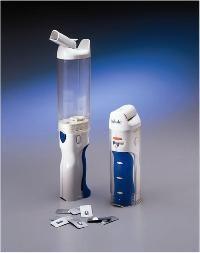
Exubera is now well on its way in Europe as well as the US.
The inhaler delivers insulin in dry form through an aerosol spray to the lung. The principle underlying inhaled insulin is that the large surface area of the lung enables the relatively large insulin molecules to cross from the lung and thence into the blood stream.
After inhalation, A relatively small amount of the dose inhaled is available for absorption (approximately 15%), but given a sufficient inhaled dose, this is clinically effective.
The onset of action is similar those of analogue insulin after s/c injections, with a duration of action which is between analogue and soluble insulin. Exubera will best suit people on multiple daily injections, who are having problems with injections.
Exubera will not be availible for people with severe asthma, those who smoke, people with lung disease or women of childbareing age. Some people may still need insulin injections. The product will be very closely watched, as it is a true medical breakthrough.
Pfizer and Sanofi are developing Exubera with Nektar Therapeutics, a small U.S. company that invented the insulin formulation and the inhaler for delivering it to the lungs.
Insider expects Pfizer to buy its partner Sanofi out of the Exubera project, once it has won a green light from regulators.
Source: Reuters, Ben Hirschler
Wednesday, July 25, 2007
Pfizer - Exubera: Oh Dear!
When Pfizer introduced Exubera, the first ever inhalable insulin product for people with diabetes, the New York-based drug giant estimated it would be a $2 billion-a-year blockbuster.
On July 18, a full year after launching Exubera, Pfizer disclosed the product's quarterly sales for the first time: An anemic $4 million.
Now the company has debuted a massive DTC ad campaign that some on Wall Street are calling a Hail Mary pass to jump-start Exubera sales.
BusinessWeek
On July 18, a full year after launching Exubera, Pfizer disclosed the product's quarterly sales for the first time: An anemic $4 million.
Now the company has debuted a massive DTC ad campaign that some on Wall Street are calling a Hail Mary pass to jump-start Exubera sales.
BusinessWeek
Thursday, October 19, 2006
German G-BA says "Nein!" to Acomplia and Exubera
The German state health insurance system will not reimburse the cost of treatment with Sanofi-Aventis' new obesity drug Acomplia or Exubera an inhaled formulation of insulin developed by Pfizer, it emerged yesterday.
The Federal Joint Committee charged with recommending drug prescribing practices and reimbursement in Germany, the G-BA, believes funding treatment with Acomplia (rimonabant) is inappropriate because it is a lifestyle drug, a viewpoint which Sanofi-Aventis has been quick to contest.
Acomplia was first introduced in June in some European markets after its approval for use alongside diet and exercise in treating overweight or obese patients with signs of dyslipidaemia and other associated risk factors. Sanofi-Aventis believes it has a blockbuster on its hands with the drug, although much will depend on securing approval in the USA, which could come before the end of the year.
Sanofi insists Acomplia meets a pressing need, with the number of obese people spiralling upwards around the developed world, closely shadowed by increases in healthcare costs. The drug's monthly cost of around $100 is justified by the improvement in cardiometabolic risk factors, it says.
Meanwhile, the G-BA also concluded that the increased cost of Exubera compared to injectable insulins did not outweigh its benefits, as its efficacy was the same but it cost five times as much.
This view echoes that of the UK's National Institute of Health and Clinical Excellence, which recommended earlier this year that Exubera only be used in patients with demonstrated needle phobia
Source: PharmaTimes
Insider's view: an interesting turn of events.
Welcome to the real world Big Pharma!
The Acomplia situation might explain why Big Pharma has been so involved in "medicalizing" obesity as "metabolic syndrome".
The Federal Joint Committee charged with recommending drug prescribing practices and reimbursement in Germany, the G-BA, believes funding treatment with Acomplia (rimonabant) is inappropriate because it is a lifestyle drug, a viewpoint which Sanofi-Aventis has been quick to contest.
Acomplia was first introduced in June in some European markets after its approval for use alongside diet and exercise in treating overweight or obese patients with signs of dyslipidaemia and other associated risk factors. Sanofi-Aventis believes it has a blockbuster on its hands with the drug, although much will depend on securing approval in the USA, which could come before the end of the year.
Sanofi insists Acomplia meets a pressing need, with the number of obese people spiralling upwards around the developed world, closely shadowed by increases in healthcare costs. The drug's monthly cost of around $100 is justified by the improvement in cardiometabolic risk factors, it says.
Meanwhile, the G-BA also concluded that the increased cost of Exubera compared to injectable insulins did not outweigh its benefits, as its efficacy was the same but it cost five times as much.
This view echoes that of the UK's National Institute of Health and Clinical Excellence, which recommended earlier this year that Exubera only be used in patients with demonstrated needle phobia
Source: PharmaTimes
Insider's view: an interesting turn of events.
Welcome to the real world Big Pharma!
The Acomplia situation might explain why Big Pharma has been so involved in "medicalizing" obesity as "metabolic syndrome".
Tuesday, September 12, 2006
Pfizer - Exubera: Jocks say nae!
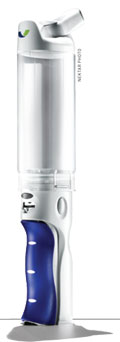
The Scottish Medicines Consortium has followed the lead of its equivalent south of the border and decided not to back the use of Pfizer's inhaled insulin product Exubera on Scotland's National Health Service.
Pfizer launched Exubera across the UK last month, even though the National Institute of health and Clinical Excellence, which decides on the cost-effectiveness of new treatments in England and Wales, said it should only be used in diabetes patients with needle phobia or persistent infections from repeated injections.
The SMC said it could not back use of Exubera because Pfizer had not supplied sufficient economic data to enable it to decide on the cost-effectiveness of the product when used as an alternative to injectable insulin.
Source: PharmaTimes
Friday, July 21, 2006
Pfizer - Exubera: US launch delay... to allow a good first impression!?
Pfizer's top brass told analysts yesterday that they will delay the launch of its inhaled insulin Exubera until September, several weeks later than originally planned.
Previously, Pfizer said the drug would be available in mid-July.
They said that they wanted to make sure U.S. educational programs for doctors, pharmacists, diabetes educators and patients cover all the bases.
"We will never get a second chance" to introduce the first inhaled insulin, said Hank McKinnell, Pfizer's chairman and CEO, in a telephone conference call with analysts.
"Our education programs and manufacturing preparations are time-consuming, but we are taking the time necessary to do the job right," said Karen Katen, a vice chairman who is in charge of Pfizer's human-health products.
"We are working to meet not only initial demand for the medicine, but also continued demand from prescription refills.
Initial supplies of Exubera will be available across the U.S. beginning in September."
Pfizer will be providing "starter kits" to selected physicians next week. The kits will contain the dry-powder insulin that's administered through an inhaler.
The samples will be sent to doctors who are heavy prescribers of insulin to control diabetics' blood sugar levels.
Interestingly, they said they wouldn't be able to gauge its U.S. performance until late 2006 or early 2007. Why so much "wiggle room", guys?
Previously, Pfizer said the drug would be available in mid-July.
They said that they wanted to make sure U.S. educational programs for doctors, pharmacists, diabetes educators and patients cover all the bases.
"We will never get a second chance" to introduce the first inhaled insulin, said Hank McKinnell, Pfizer's chairman and CEO, in a telephone conference call with analysts.
"Our education programs and manufacturing preparations are time-consuming, but we are taking the time necessary to do the job right," said Karen Katen, a vice chairman who is in charge of Pfizer's human-health products.
"We are working to meet not only initial demand for the medicine, but also continued demand from prescription refills.
Initial supplies of Exubera will be available across the U.S. beginning in September."
Pfizer will be providing "starter kits" to selected physicians next week. The kits will contain the dry-powder insulin that's administered through an inhaler.
The samples will be sent to doctors who are heavy prescribers of insulin to control diabetics' blood sugar levels.
Interestingly, they said they wouldn't be able to gauge its U.S. performance until late 2006 or early 2007. Why so much "wiggle room", guys?
The company didn't comment on Exubera's pricing, although at least one analyst has said it will be 33% to 40% higher than injectable insulin.
Source: The Street
Meanwhile, raw "feedback" from the US sales reps launch event continues.
Tuesday, July 11, 2006
Pfizer - Exubera: Janet Ruhl rules!
Business Week reports that Janet Ruhl may be Pfizer's worst nightmare.
Ruhl, who injects a small amount of insulin each day to control her diabetes, has been dissing Pfizer's soon-to-debut diabetes remedy on her new blog and on a Web discussion group.
Exubera, is the first product that lets diabetics inhale insulin powder rather than inject the drug.
But Ruhl, a 57-year-old software developer and author from Gill, Mass., says she thinks Exubera will be hard to use and could cause lung damage. "It looks like a terrible idea," Ruhl says.
Pfizer executives have told Wall Street analysts Exubera could ultimately bring in $2 billion a year in sales. But amid mounting resistance from patients and physicians, some analysts now wonder if it will be worth even half that much. "We feel they will fail to gain traction," says Sanford C. Bernstein & Co. analyst Richard T. Evans.
More here.
Ruhl, who injects a small amount of insulin each day to control her diabetes, has been dissing Pfizer's soon-to-debut diabetes remedy on her new blog and on a Web discussion group.
Exubera, is the first product that lets diabetics inhale insulin powder rather than inject the drug.
But Ruhl, a 57-year-old software developer and author from Gill, Mass., says she thinks Exubera will be hard to use and could cause lung damage. "It looks like a terrible idea," Ruhl says.
Pfizer executives have told Wall Street analysts Exubera could ultimately bring in $2 billion a year in sales. But amid mounting resistance from patients and physicians, some analysts now wonder if it will be worth even half that much. "We feel they will fail to gain traction," says Sanford C. Bernstein & Co. analyst Richard T. Evans.
More here.
Friday, January 27, 2006
Pfizer - Exubera: waiting to inhale
The EU decision to approve Pfizers' inhaled insulin Exubera on Thursday has come just before the FDA is expected to make its own determination on its future in the U.S.
The press release says:
"Exubera is a fast-acting, dry powder formulation of human insulin that is inhaled into the lungs via the mouth before meals using a simple-to-use, hand-held device that does not require batteries or electricity. The device,which weighs four ounces and is about the size of a carrying case for a pairof eye glasses, is designed to deliver an accurate and precise dose of insulin each time it is used."
But check out the "Important Safety Information" at the end (clearly Pfizers' lawyers have been all over this).
Insiders' view: I'm still worried about this one. It's a lot to ask of new technology in an unforgiving disease. The key will be patient selection and clear instructions as to when Exubera might not work.
Let's hope it's not oversold.
The press release says:
"Exubera is a fast-acting, dry powder formulation of human insulin that is inhaled into the lungs via the mouth before meals using a simple-to-use, hand-held device that does not require batteries or electricity. The device,which weighs four ounces and is about the size of a carrying case for a pairof eye glasses, is designed to deliver an accurate and precise dose of insulin each time it is used."
But check out the "Important Safety Information" at the end (clearly Pfizers' lawyers have been all over this).
Insiders' view: I'm still worried about this one. It's a lot to ask of new technology in an unforgiving disease. The key will be patient selection and clear instructions as to when Exubera might not work.
Let's hope it's not oversold.
Wednesday, March 21, 2007
Pfizer - Exubera: quote of the day

''I think Pfizer will wish they had never gotten into this. I doubt they'll regain their investment,''
''There is no advantage to Exubera and there may be a safety risk. I see it as my job to talk people out of (using) it. "
So says Dr John Buse, president-elect of the American Diabetes Association, who participated in Exubera's trials.
Source: NYT
''There is no advantage to Exubera and there may be a safety risk. I see it as my job to talk people out of (using) it. "
So says Dr John Buse, president-elect of the American Diabetes Association, who participated in Exubera's trials.
Source: NYT
Thursday, April 19, 2007
Pfizer - Exubera: 20:20 hindsight

Fred Cohen writes:
Now that sales are flagging, analysts of all stripes are writing that they long ago knew this was going to happen. This Monday-morning quarterbacking is known in behavioral circles as hindsight bias, or, as I like to call it, bullshit.
Now that sales are flagging, analysts of all stripes are writing that they long ago knew this was going to happen. This Monday-morning quarterbacking is known in behavioral circles as hindsight bias, or, as I like to call it, bullshit.
What nearly every stock analyst and pundit wrote while Exubera was in Phase 3 testing was that Exubera was going to be a big success. Nearly every clinical opinion leader I heard from (there were many) said the same thing.
Insider would like to remind his dear readers that his skepticism about "the bong" goes waaay back!
Friday, March 02, 2007
Pfizer - Exubera: where will they store the "bong mountain"?

Friedman, Billings, Ramsey analyst Jim Reddoch published numbers that suggest Pfizer has paid more to acquire and market the bong-like diabetic device than it can make back in sales.
The inhaled insulin tube has already run into skepticism from analysts and doctors who doubt that Pfizer can turn the brand into a $2 billion-a-year revenue driver that the company predicted to analysts in January.
In a note covering Nektar Therapeutics, the San Carlos, Calif., manufacturer of the Exubera device, Reddoch wrote Thursday: “With lackluster demand so far, Pfizer has built up nearly $800 million in Exubera inventory this year and, based on guidance, will have over $1.5 billion in inventory by the end of this year (i.e., nearly three years' worth of demand, based on our estimates).
More at Brandweek
The inhaled insulin tube has already run into skepticism from analysts and doctors who doubt that Pfizer can turn the brand into a $2 billion-a-year revenue driver that the company predicted to analysts in January.
In a note covering Nektar Therapeutics, the San Carlos, Calif., manufacturer of the Exubera device, Reddoch wrote Thursday: “With lackluster demand so far, Pfizer has built up nearly $800 million in Exubera inventory this year and, based on guidance, will have over $1.5 billion in inventory by the end of this year (i.e., nearly three years' worth of demand, based on our estimates).
More at Brandweek
Insider's suggestion: turn the Ann Arbor offices and labs into warehousing!
Monday, October 30, 2006
Pfizer - Exubera: wonder or white elephant?
The air is leaking out of what was supposed to be the next big thing in the treatment of diabetes: inhalable insulin.
"While inhalable insulins will see a reasonable level of uptake, they aren't the surefire blockbuster they were hyped to be," says a new study by British market research firm Datamonitor PLC. It points out that the new treatment isn't significantly better than existing therapies, is expensive and its long-term safety in the lungs is unknown.
On the other hand, inhalable insulin represents a convenient and alternative delivery system for diabetics who have a needle phobia, and are reluctant to inject themselves with insulin to control blood sugar levels in the blood.
The World Health Organization estimates diabetes has infected 194 million people, and predicts the incidence will reach 360 million by 2030. So finding innovative ways to administer insulin promises blockbuster revenues for the pharmaceutical industry.
But this month Pfizer Inc. decided to postpone the widespread rollout of Exubera, its inhaled insulin, and the only product approved for sale. The rollout has been changed to January from November, which will be about 12 months after U.S. regulators cleared the drug. Pfizer cited manufacturing issues as part of the two-month delay.
The world's No. 1 drug maker said it will continue educating 5,000 specialists before kick-starting a marketing campaign to general practitioners. The novelty of the technology requires a big marketing investment by New York-based Pfizer, analysts say. Besides paying France's Sanofi-Aventis SA $1.3-billion (U.S.) for full rights to Exubera, Pfizer has spent more than $700-million to develop the drug.
More at globeandmail.com
"While inhalable insulins will see a reasonable level of uptake, they aren't the surefire blockbuster they were hyped to be," says a new study by British market research firm Datamonitor PLC. It points out that the new treatment isn't significantly better than existing therapies, is expensive and its long-term safety in the lungs is unknown.
On the other hand, inhalable insulin represents a convenient and alternative delivery system for diabetics who have a needle phobia, and are reluctant to inject themselves with insulin to control blood sugar levels in the blood.
The World Health Organization estimates diabetes has infected 194 million people, and predicts the incidence will reach 360 million by 2030. So finding innovative ways to administer insulin promises blockbuster revenues for the pharmaceutical industry.
But this month Pfizer Inc. decided to postpone the widespread rollout of Exubera, its inhaled insulin, and the only product approved for sale. The rollout has been changed to January from November, which will be about 12 months after U.S. regulators cleared the drug. Pfizer cited manufacturing issues as part of the two-month delay.
The world's No. 1 drug maker said it will continue educating 5,000 specialists before kick-starting a marketing campaign to general practitioners. The novelty of the technology requires a big marketing investment by New York-based Pfizer, analysts say. Besides paying France's Sanofi-Aventis SA $1.3-billion (U.S.) for full rights to Exubera, Pfizer has spent more than $700-million to develop the drug.
More at globeandmail.com
Tuesday, February 27, 2007
Pfizer - Exubera: quote of the week

Pfizer believe that its inhaled insulin "bong" Exubera can reach $2 billion in sales, a forecast the company repeated to analysts in January.
“I think Pfizer is on drugs” if it believes it will get $2 billion a year from Exubera, said David Kliff, publisher of Diabetic Investor, a specialist investment data company. If Pfizer does reach its goal, “I’m going to run down Madison Avenue naked,” he says.
Much much more at BrandWeek
“I think Pfizer is on drugs” if it believes it will get $2 billion a year from Exubera, said David Kliff, publisher of Diabetic Investor, a specialist investment data company. If Pfizer does reach its goal, “I’m going to run down Madison Avenue naked,” he says.
Much much more at BrandWeek
Thursday, January 17, 2008
Lilly and inhaled insulin - beep beep

Lilly and MannKind Inc. are planning to sell inhaled insulin even after Novo Nordisk dropped its product this week and said diabetics are better off using injections.
Pfizer Inc. stopped selling its inhaled product, Exubera, in November and Novo, the world's largest insulin producer, said Jan. 14 it would no longer develop its system, called AERx.
Pfizer Inc. stopped selling its inhaled product, Exubera, in November and Novo, the world's largest insulin producer, said Jan. 14 it would no longer develop its system, called AERx.
Lilly, the first company to market insulin, said it will succeed because its device is easier to use. Mannkind says studies show its system helps patients lose weight.
Lilly and Mannkind officials said in interviews that diabetics will embrace their needle-free alternative even though they didn't like Exubera. Doctors and patients complained that Exubera's inhaler, the size of a quart of milk, was cumbersome. The treatment generated $4 million in sales in last year's second quarter.
``Inhaled insulin was a difficult idea from the get-go, given the emergence of other therapeutic options,'' said Andrew Baum, a London-based analyst with Morgan Stanley, in a telephone interview.
Patients aren't clamoring for an inhaled product because needle sizes for administering insulin have become smaller, making injections less painful, analysts said.
Even so, Mannkind, of Valencia, California, has said it will seek U.S. Food and Drug Administration approval by year's end to sell its inhaler. Indianapolis-based Lilly plans to ask for clearance next year.
Lilly needs new products to help offset losses from generic competition to the top-selling antipsychotic Zyprexa, which loses patent protection in 2011. Patents for its antidepressant, Cymbalta, and osteoporosis treatment Evista expire in 2014. The three products generated $6.8 billion in 2006, or 43 percent of revenue.
The company hasn't had a new drug cleared by the U.S. since 2005.
More at Bloomberg
Lilly and Mannkind officials said in interviews that diabetics will embrace their needle-free alternative even though they didn't like Exubera. Doctors and patients complained that Exubera's inhaler, the size of a quart of milk, was cumbersome. The treatment generated $4 million in sales in last year's second quarter.
``Inhaled insulin was a difficult idea from the get-go, given the emergence of other therapeutic options,'' said Andrew Baum, a London-based analyst with Morgan Stanley, in a telephone interview.
Patients aren't clamoring for an inhaled product because needle sizes for administering insulin have become smaller, making injections less painful, analysts said.
Even so, Mannkind, of Valencia, California, has said it will seek U.S. Food and Drug Administration approval by year's end to sell its inhaler. Indianapolis-based Lilly plans to ask for clearance next year.
Lilly needs new products to help offset losses from generic competition to the top-selling antipsychotic Zyprexa, which loses patent protection in 2011. Patents for its antidepressant, Cymbalta, and osteoporosis treatment Evista expire in 2014. The three products generated $6.8 billion in 2006, or 43 percent of revenue.
The company hasn't had a new drug cleared by the U.S. since 2005.
More at Bloomberg
Subscribe to:
Posts (Atom)